




What's Happening?
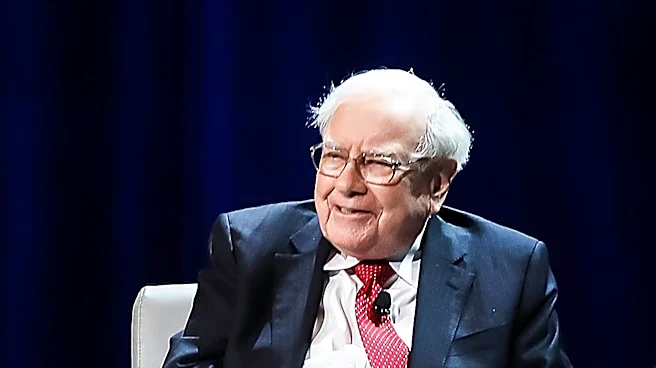
Warren Buffett, through Berkshire Hathaway, has delivered an average annual return exceeding 19% over six decades, nearly doubling the S&P 500's 10% return during the same period. This extraordinary performance has solidified Buffett's reputation as a leading
investor. His investment philosophy centers on acquiring shares in companies with strong competitive advantages, at attractive valuations, and holding them for the long term. Buffett typically favors businesses that are straightforward to understand, generate consistent cash flows, and possess stable business models. He has historically shown a preference for avoiding certain sectors, such as technology, focusing instead on companies whose future cash flows are more predictable, which aids in determining their intrinsic value. This long-term perspective, influenced by his mentor Benjamin Graham, emphasizes that while the stock market can be a 'voting machine' in the short run, it acts as a 'weighing machine' over the long term, where value ultimately drives performance. This approach also leverages tax advantages and the power of compounding, particularly with dividend-paying stocks.
Why It's Important?
Buffett's sustained outperformance over such an extended period highlights the efficacy of value investing and a long-term holding strategy in the U.S. market. His approach provides a counter-narrative to short-term trading and speculative investments, emphasizing fundamental analysis and patience. For individual investors, understanding Buffett's principles can offer a framework for making more disciplined investment decisions, potentially leading to more stable and significant returns over time. The focus on intrinsic value and predictable cash flows can help investors identify resilient companies, especially during periods of market volatility. Furthermore, Berkshire Hathaway's success demonstrates that consistent, disciplined investing can yield substantial wealth accumulation, influencing how both retail and institutional investors perceive market opportunities and risk management. The strategy also underscores the importance of understanding a business thoroughly before investing, rather than chasing trends or speculative growth.
What's Next?
While Buffett's historical returns are exceptional, the question remains whether his playbook can be effectively applied in today's market. Investors will continue to scrutinize Berkshire Hathaway's portfolio adjustments and Buffett's annual letters for insights into current market conditions and investment opportunities. The ongoing challenge for investors is to adapt Buffett's core principles—such as identifying strong moats, valuing businesses accurately, and maintaining a long-term outlook—to a rapidly evolving economic and technological landscape. As market dynamics shift, particularly with the rise of new sectors like artificial intelligence, investors will need to discern how to apply these timeless principles without blindly replicating past investment choices. The continued performance of Berkshire Hathaway under its established philosophy will serve as a benchmark for the enduring relevance of value investing.
Beyond the Headlines
The enduring success of Warren Buffett's investment philosophy extends beyond mere financial returns; it has cultivated a culture of patient, informed investing. His emphasis on understanding a business as an owner, rather than merely trading stocks, promotes a deeper engagement with corporate fundamentals and long-term economic trends. This perspective encourages ethical considerations in investment, as it often involves backing companies with sustainable business practices and strong management. The 'Buffett way' also implicitly critiques the speculative nature of some market activities, advocating for a more grounded and rational approach to wealth creation. This philosophical underpinning has influenced generations of investors and business leaders, shaping discussions around corporate governance, capital allocation, and the very purpose of investment in a capitalist system. His legacy is not just about making money, but about how money is made and managed responsibly.