



What's Happening?
Pete Townshend, the guitarist and primary songwriter for The Who, has publicly expressed a significant shift in his long-held views on Led Zeppelin. Previously, Townshend had maintained a critical distance from the band, even stating in 1995 that he disliked
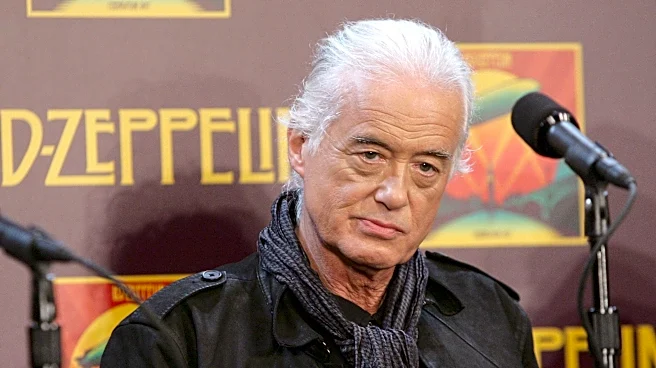
everything Led Zeppelin had produced and resented comparisons. However, in a recent interview with Classic Album Review, Townshend revealed he has been revisiting Led Zeppelin's discography and has found "some good stuff there." This change of heart has led him to attempt to arrange a lunch meeting with Led Zeppelin guitarist Jimmy Page. Townshend attributed his past resistance to a perceived rivalry, feeling that Led Zeppelin was trying to "steal our audience," a sentiment he also experienced with Jimi Hendrix. This re-evaluation comes amidst ongoing discussions about The Who's role in the origins of heavy metal, with Townshend himself disagreeing with Roger Daltrey's assertion that The Who was the first heavy metal band, instead citing AC/DC as true heavy metal.
Why It's Important?
This development is significant within the landscape of classic rock and its historical narratives. For decades, the perceived rivalry or differing artistic paths between The Who and Led Zeppelin has been a topic of discussion among fans and music historians. Townshend's public re-evaluation could lead to a more nuanced understanding of the relationship between these two iconic bands and their respective influences on rock music. It also highlights the potential for artists to evolve their perspectives over time, even on long-standing professional relationships or rivalries. A potential meeting between Townshend and Page could spark new collaborations, discussions, or even retrospective projects that would be of immense interest to the music industry and fan bases. This shift also subtly redefines the historical context of rock music's evolution, suggesting that even foundational figures can revise their interpretations of their peers' contributions.
What's Next?
The immediate next step would be whether Pete Townshend successfully arranges a meeting with Jimmy Page. If a meeting occurs, it could potentially lead to public statements, joint appearances, or even collaborative musical endeavors, though the latter remains speculative. Such an event would undoubtedly generate considerable media attention within the music world. Fans of both bands will be keenly watching for any updates regarding this potential reconciliation or collaboration. Beyond a direct meeting, Townshend's changed perspective might influence future interviews, documentaries, or retrospective analyses of both bands, potentially leading to a more integrated view of their contributions to rock history. This could also encourage other musicians to openly re-evaluate past rivalries or critical stances, fostering a more collaborative and appreciative environment within the music industry.
Beyond the Headlines
Beyond the immediate news of a potential meeting, Townshend's shift in perspective offers a broader commentary on artistic maturity and the re-evaluation of historical narratives. It suggests that initial competitive feelings, common in the formative years of influential bands, can give way to appreciation and respect over time. This evolution reflects a deeper understanding of shared musical heritage rather than just individual band legacies. The acknowledgment of past competitive feelings, particularly the idea of bands 'stealing audiences,' sheds light on the intense pressures and rivalries that shaped the music scene of the 1960s and 70s. This narrative also underscores the subjective nature of musical taste and critical assessment, even among the creators themselves, demonstrating that artistic judgments are not always static and can evolve with personal and professional growth.