



What's Happening?
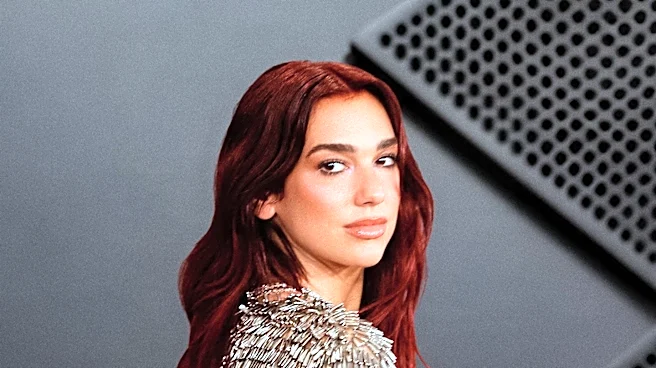
Dua Lipa, the Grammy-winning pop star, has transcended her music career to become a significant figure in lifestyle and cultural trends. She is recognized not only for her music but also for her recommendations on travel, literature, and dining. Lipa actively
engages with her audience through various platforms, including her book club where she interviews authors like Margaret Atwood, and her lifestyle platform, Service95, which offers cultural recommendations. Her presence extends into the fashion world, notably through her friendship with designer Simon Porte Jacquemus. This multi-faceted approach allows her to connect with diverse audiences beyond her music fanbase, creating additional revenue streams beyond traditional record sales and concert tickets. This trend reflects a broader shift in the creator economy, where celebrities are expanding their personal brands into various business ventures.
Why It's Important?
Dua Lipa's success in diversifying her brand illustrates a significant evolution in the creator economy and celebrity influence. In an era where U.S. spending on creator advertising is projected to reach $44 billion this year, celebrities are increasingly leveraging their personalities into businesses. However, this expansion also highlights a potential shift in consumer perception. While celebrities like Lipa successfully build broad appeal, there's a growing sentiment among younger consumers (13-39 year olds) of fatigue with omnipresent big names. A July survey by YPulse indicated that 62% are tired of seeing the same major influencers, with 73% trusting smaller creators more. This suggests that while visibility can be bought, cultural credibility and the perception of 'cool' are harder to acquire, posing a challenge for an industry heavily reliant on constant exposure and engagement.
What's Next?
The evolving landscape of the creator economy suggests that future celebrity success may depend less on sheer visibility and more on authentic engagement and niche appeal. As consumers, particularly younger demographics, express weariness with overexposed personalities, there may be a shift towards valuing more curated and less commercialized content. Celebrities and brands might need to re-evaluate their strategies, focusing on genuine connections and specialized interests rather than broad, all-encompassing campaigns. This could lead to a rise in micro-influencers and creators who foster deeper trust with their audiences, potentially altering how advertising dollars are allocated within the $44 billion creator economy. The challenge for established stars like Dua Lipa will be to maintain their cultural relevance and perceived authenticity amidst this changing consumer sentiment.
Beyond the Headlines
Dua Lipa's multifaceted career points to a deeper cultural shift in how 'cool' is defined and consumed in the digital age. Historically, the allure of 'cool' often stemmed from mystery and limited access, as seen with figures like Kate Moss or the Olsen twins. Social media initially fostered relatability, bringing audiences closer to admired personalities. However, the current saturation of celebrity-turned-business ventures and shoppable lifestyles may be diminishing the very appeal it sought to create. The economic implications are significant: if being 'everywhere' no longer guarantees influence, the fundamental business model of the creator economy, which thrives on visibility, could be challenged. This raises questions about the long-term sustainability of celebrity-driven brand extensions and the potential for a return to valuing exclusivity or more specialized, less commercialized forms of cultural influence.