








What's Happening?
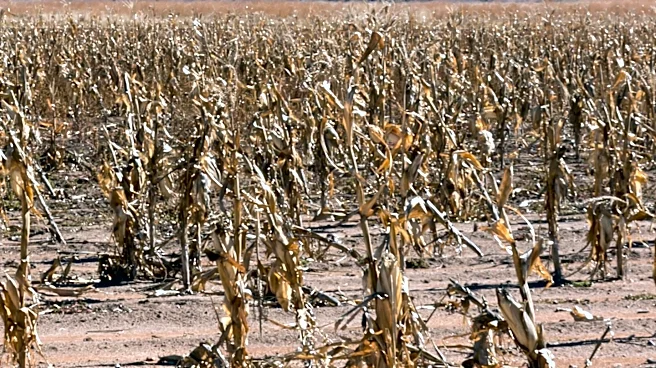
Recent heat waves have caused a significant increase in corn and soybean prices, as traders focus on weather-related risks to global crops. The most-active soybean and corn contracts rose by over 3%, reaching their highest prices in weeks. The heat dome
that affected much of the U.S. over the weekend has raised concerns about the impact on corn's pollination stage, which is crucial for yield outcomes. The National Weather Service reports that high temperatures persist in parts of the eastern U.S., adding to the uncertainty. Additionally, weather conditions in Europe and Brazil are contributing to market volatility, with potential damage to crops in France and unusual rain forecasts in Brazil.
Why It's Important?
The surge in corn and soybean prices highlights the vulnerability of agricultural markets to weather fluctuations. As these crops are essential components of the global food supply, any disruption can have widespread economic implications. Higher prices can lead to increased costs for food manufacturers and consumers, potentially affecting food security. The situation underscores the importance of monitoring weather patterns and their impact on agriculture, as well as the need for strategies to mitigate climate-related risks. The market's focus on weather also reflects the interconnected nature of global agricultural supply chains, where events in one region can influence prices and availability worldwide.
What's Next?
Traders and analysts will continue to monitor weather forecasts closely, as they play a critical role in determining crop yields and market dynamics. The upcoming USDA supply and demand report for July will provide further insights into the state of U.S. agriculture and potential adjustments in production estimates. Additionally, developments in U.S.-China trade relations, particularly regarding agricultural products, could influence market trends. As the situation evolves, stakeholders may explore measures to enhance resilience against weather-related disruptions, such as investing in climate-smart agriculture and improving forecasting capabilities.