


What's Happening?
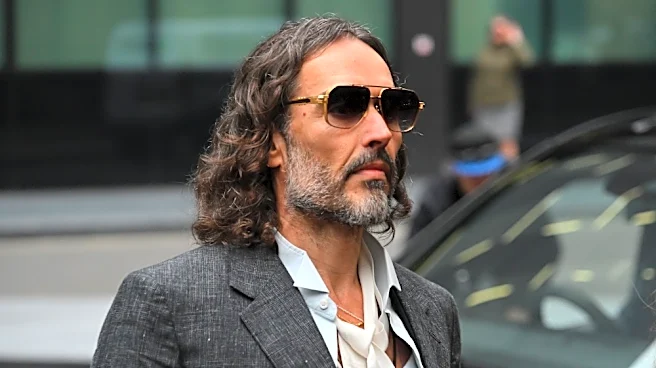
Katy Perry is reportedly facing questions from her inner circle regarding her silence on ex-husband Russell Brand's recent conviction for rape and sexual assault. Brand was sentenced on November 9 to 10 years and six months in prison for offenses involving
four women between 2004 and 2009, prior to his marriage to Perry. Despite the high-profile nature of the conviction and their past marriage, Perry has not publicly commented. Sources close to the pop star suggest that friends are wondering if she witnessed any troubling behavior during their 14-month marriage, which ended in December 2011. While no one is blaming Perry for Brand's actions, there is curiosity about why she has not discussed their relationship more openly. Perry previously described Brand's behavior during their marriage as 'very controlling' and noted his discomfort with her professional success and independence.
Why It's Important?
This situation highlights the broader societal conversation surrounding accountability and the re-evaluation of past relationships in light of serious criminal convictions. For public figures like Katy Perry, there is often an expectation from the public and media to address significant events involving their past, especially when those events involve serious allegations and convictions. Her silence, while a personal choice, can lead to speculation and pressure from various stakeholders, including fans, media, and those advocating for victims of sexual assault. The renewed interest in her past marriage to Brand underscores how high-profile cases can trigger a re-examination of historical narratives and the roles individuals played or perceived to have played, even indirectly. This also touches upon the complexities of public figures navigating personal trauma and public expectation simultaneously.
What's Next?
It remains uncertain whether Katy Perry will choose to address Russell Brand's conviction publicly. Her past statements about their marriage being 'controlling' could be re-examined by the media in the context of Brand's conviction. The ongoing public discourse around Brand's case may continue to place indirect pressure on Perry to comment, though she has consistently maintained a private stance on the matter since their divorce. Any future statements from Perry, or continued silence, will likely be met with significant media attention and public interpretation, potentially influencing public perception of both individuals involved. The focus may also shift to how other public figures who have had past associations with Brand respond to his conviction.
Beyond the Headlines
The situation surrounding Katy Perry's silence extends beyond mere celebrity gossip, touching upon deeper themes of victimhood, complicity, and the societal pressure on women to speak out against abuse. While Perry is not accused of any wrongdoing, the questions directed at her reflect a broader cultural shift where past behaviors and relationships of convicted individuals are scrutinized more intensely. This can create a difficult position for individuals who were once intimately connected to perpetrators, forcing them to navigate personal feelings alongside public expectations. It also raises ethical questions about the media's role in pressing individuals for comments on sensitive personal histories, especially when those individuals are not directly involved in the criminal proceedings. The narrative also highlights the long-term impact of abusive behavior, which can reverberate through the lives of many, even years after the events.