


What's Happening?
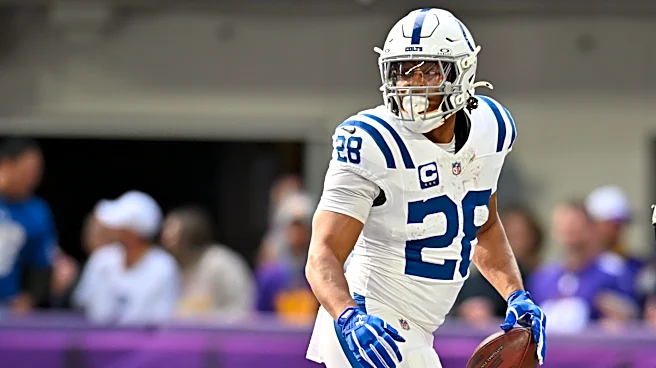
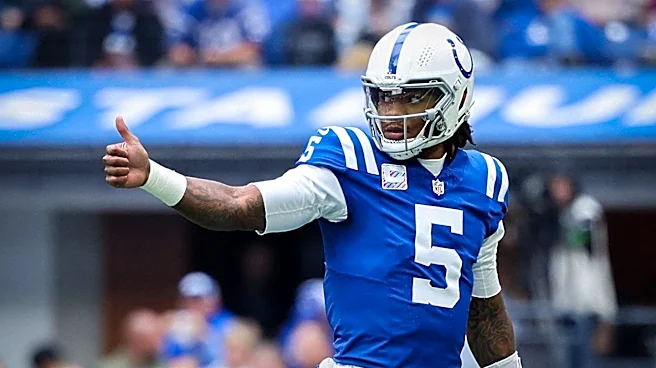
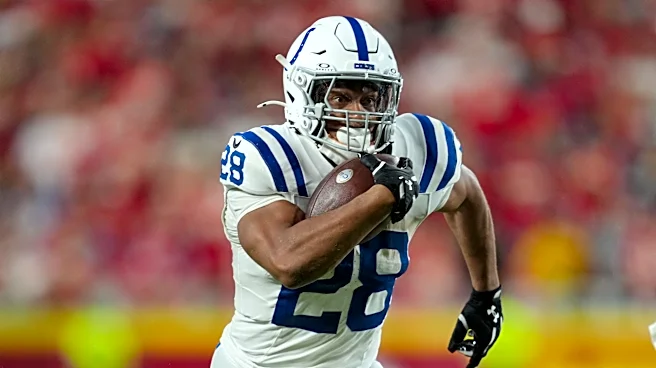
Bill Simmons, a prominent sports media personality, has voiced strong criticism regarding the Indianapolis Colts' current state, labeling their performance as a "disaster" and noting the team is in the midst of a "fire sale." This commentary comes as the Colts hold
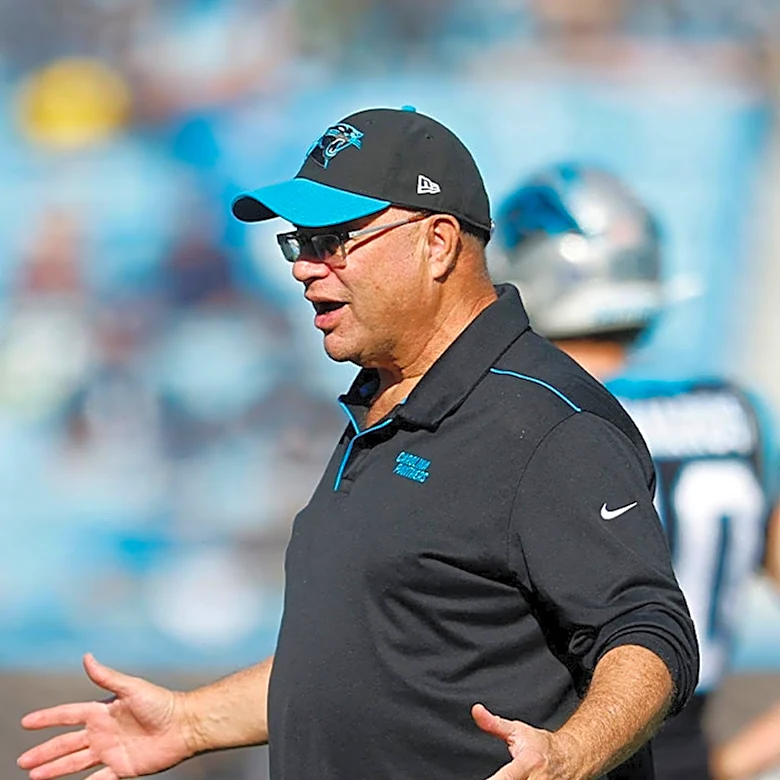
a 2-5 record. Simmons' remarks align with sentiments from former Colts quarterback Sean Salisbury, who also criticized the team's owner, Carlie Irsay-Gordon, for her hands-on approach, specifically her presence on the sidelines during games. Salisbury argued that an owner's sideline presence can be perceived as micro-management by players, which he believes is detrimental to team morale and performance. Irsay-Gordon, who became principal owner in 2025, has stated her sideline presence is to gain a better understanding of team operations.
Why It's Important?
The criticism from influential figures like Bill Simmons and former players such as Sean Salisbury can significantly impact public perception of the Indianapolis Colts' leadership and team direction. For a professional sports franchise, negative commentary from respected voices can erode fan confidence, affect ticket sales, and potentially influence player recruitment and retention. The debate over an owner's sideline involvement highlights a broader tension between executive oversight and team autonomy in sports. While owners have a vested interest in their team's success, perceived micro-management can create an uncomfortable environment for coaches and players, potentially hindering performance and fostering internal discord. This situation underscores the delicate balance required in sports management to ensure effective leadership without undermining the professionals on the field.
What's Next?
The Colts' poor record and the ongoing criticism suggest that pressure will continue to mount on the team's management and coaching staff. If the team's performance does not improve, further changes, potentially including coaching adjustments or player trades, could be considered as part of the 'fire sale' mentioned by Simmons. The debate surrounding Carlie Irsay-Gordon's sideline presence may also intensify, potentially leading to calls for her to alter her approach to team oversight. The team's response to these criticisms and their ability to turn around their season will be closely watched by fans, media, and the league, as it could have long-term implications for the franchise's stability and public image.
Beyond the Headlines
This situation delves into the complex dynamics of ownership, management, and player psychology in professional sports. The concept of a 'fire sale' indicates a strategic decision to offload assets, often high-salaried players, to rebuild the team, which can have significant financial and competitive implications. The owner's hands-on approach, while intended to foster understanding, raises questions about the boundaries of executive involvement and its psychological impact on a team. It highlights the unique challenges faced by owners in maintaining a balance between passionate engagement and professional distance. This scenario could serve as a case study for other sports franchises on the potential pitfalls of perceived micro-management and the importance of clear roles and responsibilities within a sports organization.