
What's Happening?
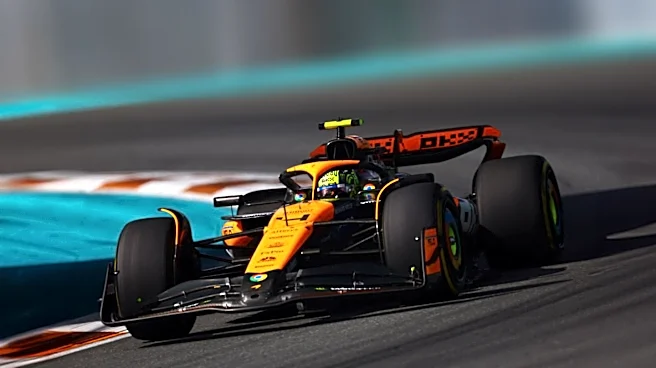
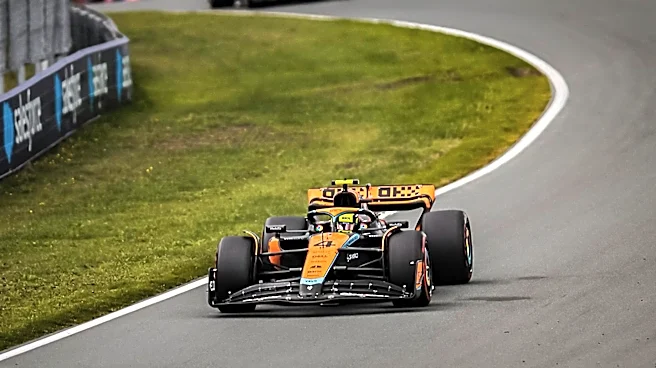
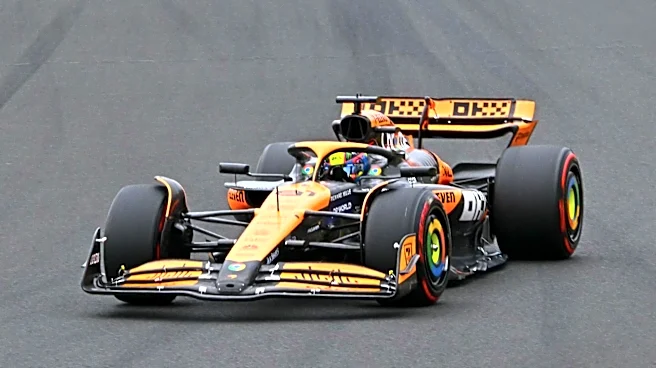
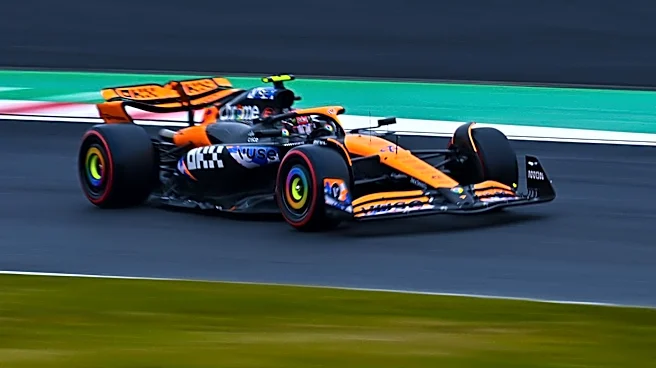
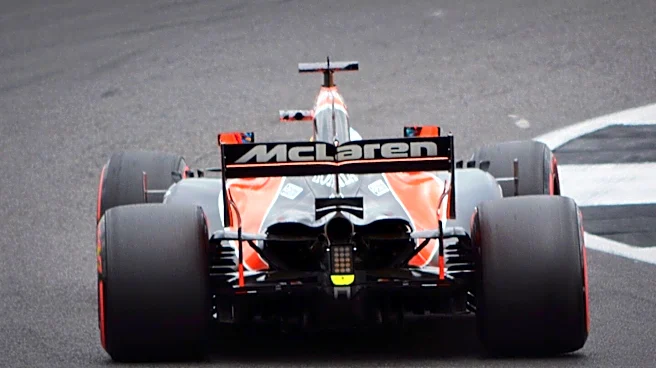
McLaren has approved a new 'rotating rear wing' design following successful testing at the Hungarian Grand Prix. The innovative wing passed both mechanical and aerodynamic evaluations during practice sessions,
although it was not used in the actual race. This development is part of McLaren's efforts to enhance aerodynamic efficiency and reduce drag, following similar innovations by Ferrari and Red Bull. The new design, which inverts the upper flap to induce lift and reduce rolling resistance, is expected to be used in upcoming races. McLaren's team principal, Andrea Stella, confirmed that the data from the track matched pre-event simulations, allowing the team to move forward with the design.
Why It's Important?
The approval of McLaren's new rear wing design represents a significant step in the team's ongoing efforts to improve their competitive edge in Formula 1. By enhancing aerodynamic efficiency, the team can potentially achieve better performance on high-speed tracks, which is crucial for gaining an advantage over competitors. This development also highlights the importance of innovation and adaptation in the highly competitive world of Formula 1, where teams constantly seek technological advancements to improve their cars' performance. For McLaren, this could translate into better race results and a stronger position in the championship standings.
What's Next?
McLaren plans to introduce the new rear wing design in future races, particularly at high-speed venues like Monza and Baku, where the aerodynamic benefits can be maximized. The team will continue to refine the design and gather data to ensure optimal performance. As other teams, such as Ferrari and Red Bull, also work on similar innovations, McLaren will need to stay ahead in the development race to maintain a competitive edge. The success of this new design could influence future aerodynamic strategies and designs within the team and across the sport.