









What's Happening?
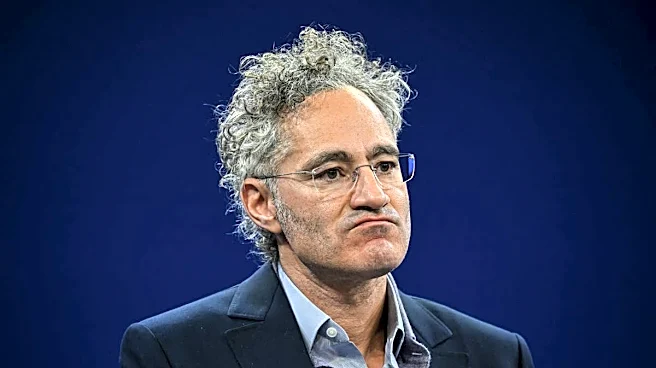
In a recent interview, Palantir CEO Alex Karp expressed concerns about the disproportionate wealth distribution resulting from advancements in artificial intelligence (AI). Karp noted that while AI is likely to improve living standards broadly, the financial
gains will be significantly skewed towards a small group of individuals, potentially exacerbating existing economic disparities. He highlighted that the wealth gap created by AI could be much larger than previous technological revolutions, where the wealth increase was more evenly distributed.
Why It's Important?
Karp's comments underscore a growing concern about the socio-economic impacts of AI, particularly regarding wealth inequality. As AI continues to transform industries, the potential for a small elite to accumulate vast wealth could lead to increased social tensions and calls for regulatory intervention. The discussion also reflects broader anxieties about job displacement and the ethical responsibilities of tech leaders in managing AI's societal impacts.
What's Next?
The debate over AI's role in wealth distribution is likely to intensify as the technology becomes more integrated into various sectors. Policymakers and industry leaders may need to consider measures to ensure more equitable economic benefits, such as taxation, regulation, or initiatives to promote broader access to AI-driven opportunities. Public discourse on AI ethics and governance will continue to shape the development and deployment of AI technologies.
Beyond the Headlines
Karp's remarks highlight the ethical and cultural dimensions of AI's impact on society. The potential for AI to create a 'complete decoupling' between economic gains and the broader population raises questions about the values and priorities guiding technological innovation. The conversation also touches on the public's perception of tech leaders and the need for transparency and accountability in AI development.