






What's Happening?
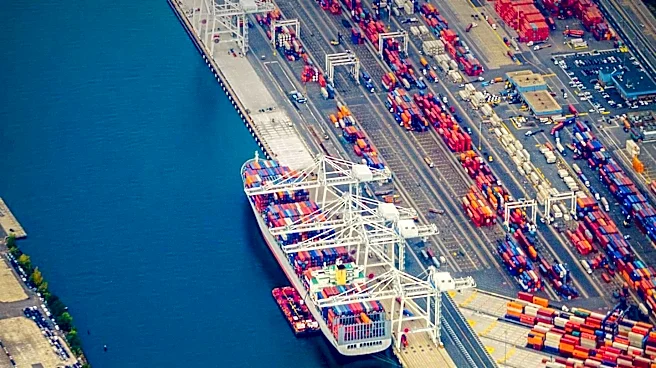
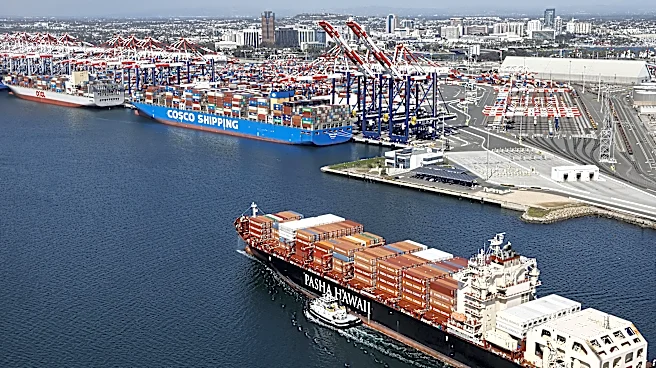
The Port of Los Angeles has reported a significant milestone, handling 1,026,872 TEUs (twenty-foot equivalent units) in October 2026. This figure not only sets a new record for the month of October but also marks the second-highest monthly container volume
in the port's history. Notably, this is the first time the Port of Los Angeles has exceeded 1 million TEUs in two consecutive months. This strong performance in October follows an all-time record set in September, where the port processed 1,042,652 TEUs. The consistent high volume indicates a sustained period of robust activity at one of the United States' busiest ports.
Why It's Important?
This sustained record-breaking performance at the Port of Los Angeles is a critical indicator of the health and activity of U.S. trade and supply chains. As a major gateway for goods entering and exiting the country, the port's high throughput suggests strong consumer demand and industrial production. For U.S. businesses, particularly those involved in retail, manufacturing, and logistics, these volumes can signify both opportunities and challenges. While high volumes reflect robust economic activity, they also place pressure on port infrastructure, trucking, and warehousing, potentially leading to congestion and increased operational costs if not managed effectively. The consistent flow of goods through this port directly impacts the availability and pricing of products across the nation, affecting consumers and various industries.
What's Next?
The Port of Los Angeles will likely continue to monitor these high volumes closely, potentially implementing strategies to maintain efficiency and prevent bottlenecks. Stakeholders, including shipping companies, logistics providers, and retailers, will be observing whether this trend of elevated container traffic persists into the coming months. Continued high volumes could necessitate further investments in port infrastructure, automation, and workforce development to sustain operations without significant disruptions. The port's ability to manage this increased demand will be crucial for maintaining the fluidity of the U.S. supply chain, especially as holiday seasons or other peak periods approach.
Beyond the Headlines
The consistent record-breaking container volumes at the Port of Los Angeles highlight broader shifts in global trade patterns and the increasing reliance on efficient maritime logistics. This sustained activity underscores the critical role that major U.S. ports play not only in economic prosperity but also in national security and resilience. The environmental impact of such high volumes, including emissions from ships and port operations, will also become a more prominent concern, potentially driving further innovation in green shipping technologies and sustainable port practices. Furthermore, the data generated from these operations can inform policy decisions regarding trade agreements, infrastructure spending, and regulatory frameworks, shaping the future of U.S. commerce and its global connections.