




What's Happening?
A delegation from the European Parliament’s International Trade Committee (INTA) recently concluded a three-day visit to China, engaging in discussions on trade imbalances, market access concerns, and opportunities for dialogue. The delegation, led by
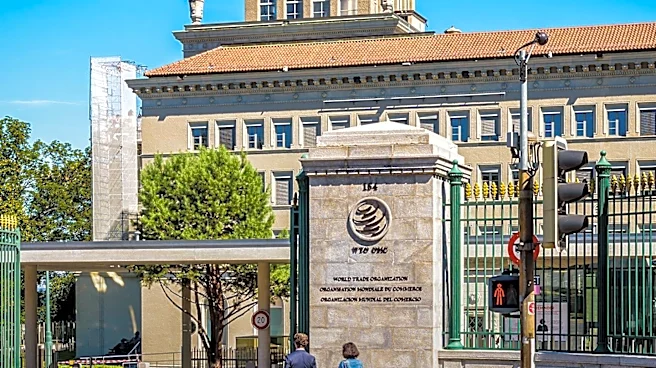
INTA chair Bernd Lange, emphasized the urgency of stabilizing and rebalancing the EU-China trade relationship. While acknowledging the interdependence between the two economies, MEPs stressed that the current Chinese export model is not sustainable for the EU. They highlighted the need for concrete results beyond dialogue, citing the recent Trade and Investment Consultation (TIC) agreement on hybrid car imports as a positive starting point. The delegation met with high-ranking Chinese officials, including Minister of Commerce Wang Wentao, and discussed concerns such as obstacles for EU companies in China, unpredictable supply chains, access to critical raw materials, and excess production capacity. They also explored strengthening the multilateral trade framework within the WTO.
Why It's Important?
The EU's trade relationship with China is significant, with China being the EU's third-largest trading partner. However, the relationship is perceived as unbalanced, marked by a steadily growing EU deficit with China, recently reaching €1 billion a day. This imbalance, coupled with market access concerns and issues affecting EU companies operating in China, poses economic challenges for the European Union. The push for continued engagement and concrete results reflects a strategic effort to ensure fair trade practices and to protect EU industries and jobs. A failure to rebalance this relationship could lead to increased trade tensions, potentially impacting global supply chains and economic stability. The discussions also touch upon broader geopolitical considerations, as both sides seek to avoid a trade conflict while addressing their respective economic interests.
What's Next?
The European Parliament's delegation expressed hope for continued progress in the spirit of the recent TIC talks, aiming to deliver more benefits for citizens on both sides. They urged for more sectors to follow the approach seen in the hybrid car imports agreement and for credible implementation of existing commitments. The MEPs stressed the importance of increasing the frequency of dialogue between the EU and China to build trust and prevent trade conflicts. Future steps will likely involve ongoing diplomatic efforts to address trade imbalances, improve market access for EU companies, and ensure transparency on subsidies and supply chains. The EU's strategy is based on dialogue, but the emphasis on 'results' indicates a readiness to trigger measures if imbalances persist, suggesting a potentially more assertive stance in future negotiations.
Beyond the Headlines
The discussions between the European Parliament and China extend beyond immediate trade figures, touching upon fundamental aspects of economic governance and global trade norms. The EU's concerns about the Chinese export model and market access reflect a broader international debate about fair competition, intellectual property rights, and the role of state-backed enterprises in global markets. The emphasis on strengthening the multilateral trade framework within the WTO underscores a commitment to rules-based international trade, which is crucial for global economic stability. The outcome of these ongoing dialogues could set precedents for how major economic blocs address trade imbalances and market distortions, influencing future trade policies and potentially shaping the global economic order.