





What's Happening?
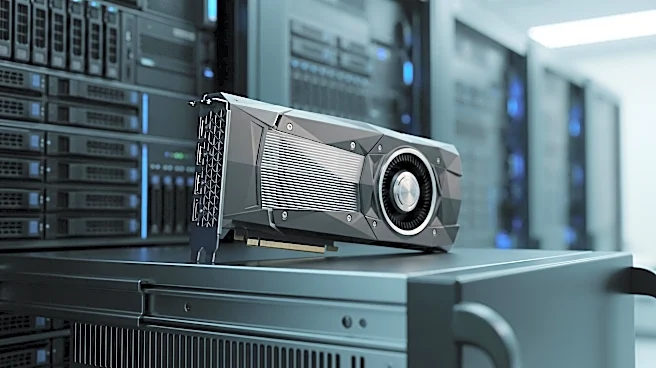
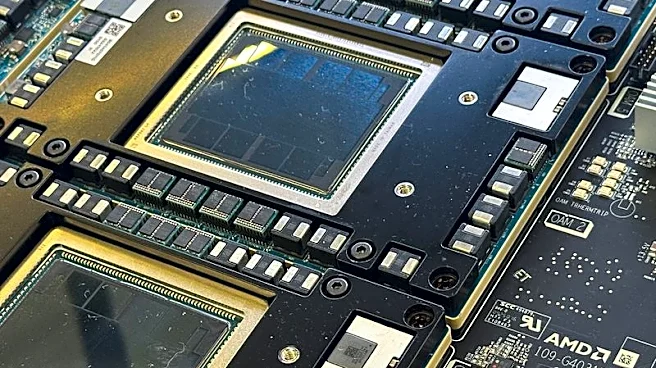
Nvidia and Taiwan Semiconductor Manufacturing (TSMC) are identified as key beneficiaries of the AI-fueled semiconductor boom. Nvidia, with its dominant position in graphics processing units (GPUs), has capitalized on the demand for AI chips used in training
large language models (LLMs) like ChatGPT and Grok. The company now holds over 70% market share in the AI inference space, which is projected to generate more revenue than training workloads by 2026. TSMC, as Nvidia's foundry partner, manufactures these chip designs. The expansion of AI into new niches like physical AI, encompassing humanoid robots, autonomous vehicles, and drones, is expected to further drive Nvidia's growth. Analysts anticipate Nvidia's earnings to more than double in two fiscal years, with a long-term earnings per share (EPS) growth estimate of 50%.
Why It's Important?
The continued growth of Nvidia and TSMC is crucial for the advancement of artificial intelligence infrastructure globally. Nvidia's leadership in GPU technology directly impacts the development and deployment of AI applications across various sectors, from data centers to emerging physical AI technologies. TSMC's role as a leading semiconductor manufacturer ensures the physical production of these advanced chips, supporting the entire AI ecosystem. Their sustained growth signifies ongoing innovation and investment in AI, which has broad implications for technological progress, economic development, and the competitive landscape of the tech industry. The projected revenue shift from AI training to inference highlights a maturing AI market, where the application and deployment of AI models become as critical as their development.
What's Next?
Nvidia is expected to continue expanding its addressable market through new AI niches, such as physical AI, which Mordor Intelligence predicts will grow by 37% annually through 2031. This expansion beyond data centers into real-world applications like robotics and autonomous vehicles will sustain Nvidia's growth trajectory. Analysts will closely watch Nvidia's upcoming earnings reports to confirm the sustained demand for AI data center solutions. For TSMC, its ongoing partnership with Nvidia and its role in manufacturing chips for a diverse customer base, including Apple and Intel, positions it for continued relevance in the semiconductor industry as AI demands evolve.
Beyond the Headlines
The symbiotic relationship between Nvidia and TSMC underscores the complex and interdependent nature of the modern technology supply chain. Nvidia's innovation in chip design relies heavily on TSMC's advanced manufacturing capabilities, creating a bottleneck that highlights the strategic importance of semiconductor foundries. This dynamic also points to potential geopolitical implications, as the concentration of advanced chip manufacturing in specific regions can create vulnerabilities and influence global technological leadership. The rapid evolution of AI, driven by these companies, also raises broader questions about the future of work, ethical AI development, and the societal impact of increasingly intelligent autonomous systems.