
What's Happening?
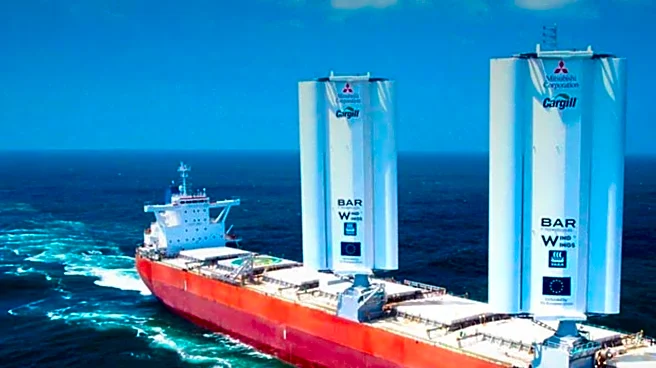
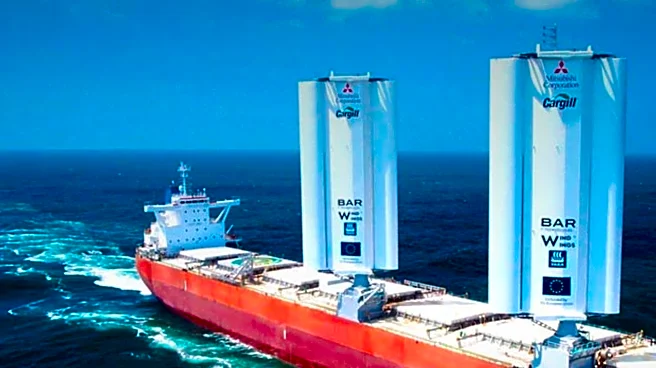
BAR Technologies has called on the shipping industry to prioritize decarbonization efforts rather than waiting for the development of alternative fuels and regulatory certainty. This statement comes in response
to a study by EY Greece, which highlights the capital-intensive and uneven nature of the shipping industry's transition to net zero. The study identifies challenges such as limited fuel availability, infrastructure gaps, and financing constraints. John Cooper, CEO of BAR Technologies, emphasized the need for immediate action, suggesting that energy-efficiency measures, such as wind-assisted propulsion, can be implemented now. The International Windship Association reports that over 100 large cargo vessels are already using wind power. Despite the technical feasibility of wind propulsion, financial and commercial barriers remain, with shipowners often bearing the cost of efficiency technologies while charterers benefit from reduced fuel costs.
Why It's Important?
The push for immediate decarbonization in the shipping industry is significant as it addresses the urgent need to reduce carbon emissions in one of the world's most polluting sectors. By focusing on energy efficiency and operational improvements, the industry can make substantial progress towards sustainability without waiting for future technologies. This approach not only supports environmental goals but also enhances operational efficiency and reduces fuel costs. However, the financial and commercial challenges highlighted by BAR Technologies indicate a need for better financial structures and incentives to support shipowners in adopting these technologies. The success of this transition could set a precedent for other industries facing similar challenges in balancing economic and environmental priorities.
What's Next?
The future of shipping's decarbonization will likely depend on increased collaboration across the maritime value chain, as suggested by the EY study. This includes developing financial mechanisms that fairly distribute the benefits of efficiency technologies between shipowners and charterers. Additionally, the industry may see a push for more accessible green financing options to support the adoption of energy-efficient technologies. As the sector reaches a critical inflection point, stakeholders may need to engage in more coordinated efforts to overcome the financial and commercial barriers to widespread deployment of decarbonization measures.