






What's Happening?
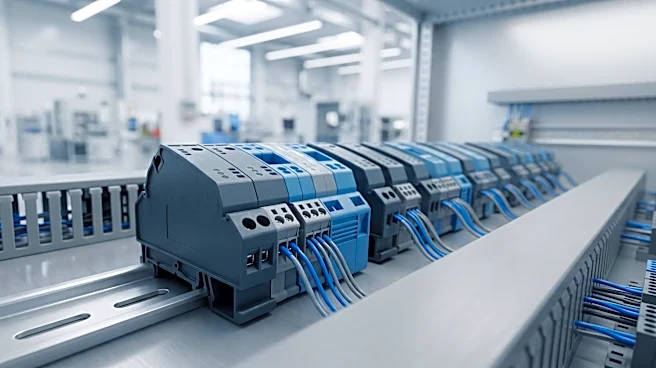
The adoption of pluggable 5.08mm pitch DIN rail terminal blocks is dramatically decreasing the time and error rates associated with wiring PLC control cabinets. Traditional screw-clamp terminals require 45-90 seconds per wire for stripping, inserting,
tightening, and verifying, leading to over 13 hours of direct wiring labor for a cabinet with 800 terminations. In contrast, pluggable connectors reduce this to 15-25 seconds per connection. This new method shifts the wiring paradigm from terminating individual wires in the cabinet to pre-terminating wire harnesses with pluggable connectors. This allows for the complex and error-prone wiring work to be performed in a controlled factory environment, often with automated testing equipment, before the harnesses arrive at the panel shop. The panel builder's role changes from individual wire termination to simply inserting pre-assembled connectors into their corresponding headers.
Why It's Important?
This technological shift has significant implications for industrial automation OEMs and panel builders in the U.S. The primary benefit is a substantial reduction in labor content, with a 50-70% decrease in wiring time per connection, translating to 40-60 hours saved per PLC cabinet. Beyond labor savings, the fixed pin design of pluggable connectors virtually eliminates wiring errors, which traditionally account for 2-5 errors per cabinet and add 30-225 minutes of rework time. This improved accuracy reduces functional testing time from 4-6 hours to less than an hour. Furthermore, the economic impact extends to field service, where module replacement time drops from 45-105 minutes to under 10 minutes. In industries where machine downtime costs $500-$5000 per hour, these savings in service can triple to quintuple the incremental cost of pluggable terminals over the machine's 10-15 year service life, making it a compelling investment for U.S. manufacturers seeking to enhance efficiency and reduce operational costs.
What's Next?
The trend towards pluggable terminal blocks is expected to continue as industrial automation companies seek greater efficiency and reliability. UL 508A and IEC 61439 standards already acknowledge pluggable connections as an acceptable method for improving connection quality, provided the connectors are listed for the application and meet voltage/current specifications. This regulatory acceptance will likely encourage broader adoption. Manufacturers will continue to invest in pre-fabricated wire harnesses and automated testing equipment to maximize the benefits of this technology. The focus will shift towards optimizing the off-site harness assembly process and further integrating these components into overall system designs. This will lead to more streamlined production lines, reduced on-site labor, and fewer costly errors during installation and maintenance, ultimately enhancing the competitiveness of U.S. industrial automation.
Beyond the Headlines
The shift to pluggable terminal blocks represents a deeper evolution in manufacturing and industrial design, moving towards modularity and pre-fabrication. This approach not only addresses immediate concerns like labor costs and error rates but also fosters a more resilient and adaptable manufacturing ecosystem. By transferring complex, manual tasks to controlled factory environments, it allows for higher quality control and consistency, reducing the reliance on individual technician skill for critical wiring. This also has implications for workforce development, potentially shifting the demand from on-site wiring technicians to skilled workers in harness assembly and automated testing. The long-term impact could be a more standardized and efficient approach to industrial control system deployment, enabling faster commissioning and easier maintenance across various U.S. industries, from automotive to pharmaceutical manufacturing.