






What's Happening?
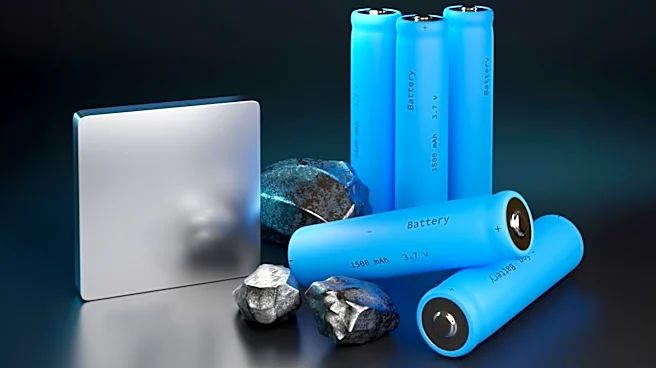
Lithium batteries are fundamental to powering a wide array of modern devices and vehicles, including phones, laptops, electric cars, solar storage systems, and golf carts. These batteries store electrical energy through controlled chemical reactions,
where lithium ions move between positive and negative electrodes. During discharge, electrons travel through an external circuit, providing usable electricity, and this process reverses during charging to store energy. The U.S. Department of Energy notes that lithium-ion batteries are widely used in electric vehicles due to their high energy efficiency and favorable power-to-weight performance. Different lithium chemistries exist, such as lithium nickel manganese cobalt oxide and lithium iron phosphate (LiFePO4), each offering distinct characteristics like cycle life and thermal stability.
Why It's Important?
The widespread adoption of lithium battery technology is a critical driver of innovation and efficiency across multiple U.S. industries. In the automotive sector, their lighter weight and consistent voltage output are accelerating the transition to electric vehicles, reducing reliance on fossil fuels and contributing to environmental goals. For consumer electronics, lithium batteries enable the portability and extended use of devices, enhancing productivity and connectivity. In renewable energy systems, they provide essential storage solutions, improving grid stability and the integration of intermittent energy sources. This technology's continuous improvement is vital for economic competitiveness, energy security, and advancing sustainable practices.
What's Next?
The development of lithium battery technology will continue to focus on improving lifespan, safety, and performance. Factors such as temperature, charging habits, and depth of discharge significantly influence battery durability, prompting ongoing research into more robust chemistries and advanced battery management systems (BMS). BMS are crucial for monitoring voltage, temperature, and current to ensure safe operation and extend battery life, particularly in large packs used in electric transportation. Future innovations will likely include further advancements in charging speed, energy density, and the development of more sustainable and recyclable battery components, addressing both performance demands and environmental concerns.
Beyond the Headlines
The dominance of lithium battery technology carries significant implications beyond its immediate functional benefits. The global demand for lithium and other rare earth minerals raises geopolitical and environmental concerns regarding mining practices and resource availability. The safety of lithium batteries, while generally high when properly manufactured and managed, remains a critical area of focus, especially with incidents of thermal runaway. Furthermore, the end-of-life management of these batteries, including recycling and repurposing, is an evolving challenge that requires innovative solutions to prevent environmental pollution and recover valuable materials. The ongoing research into alternative battery chemistries and solid-state technologies reflects a long-term vision for more sustainable, safer, and even higher-performing energy storage solutions.