






What's Happening?
The Federal Aviation Administration (FAA) has released a new forecast for advanced air mobility (AAM) aircraft, predicting 24,600 departures in the first year of service. The FAA anticipates that each AAM aircraft will conduct an average of 28 trips per
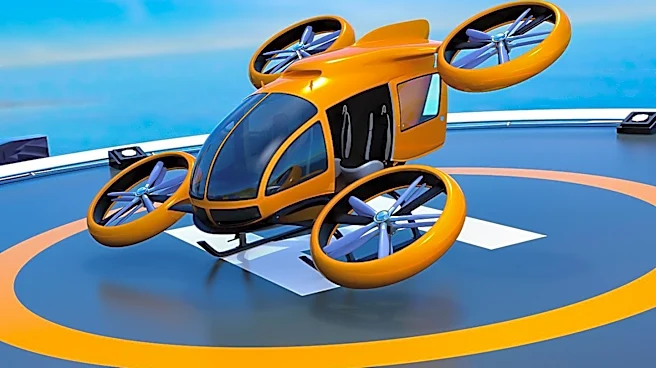
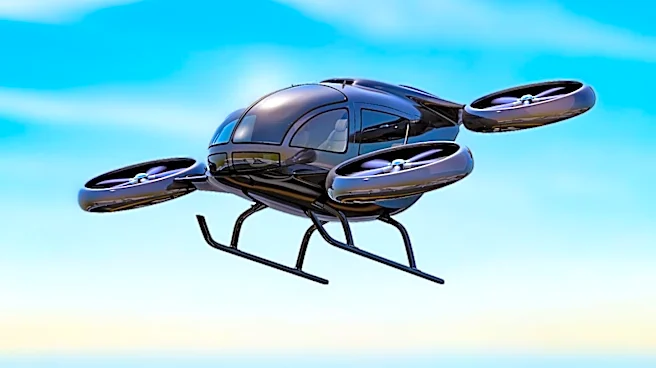
day. The first Joby eVTOL Integration Pilot Program flights are set to begin in Texas in September 2026, with up to 80 eVTOLs expected to be operational by 2028. This projection is lower than the forecasts of eVTOL developers like Archer Aviation, which plans to build 650 eVTOLs by 2028. Joby Aviation is scaling its operations in California and Ohio to produce four aircraft per month, while BETA Technologies aims to manufacture 300 aircraft annually at its Vermont facility.
Why It's Important?
The FAA's forecast underscores the growing interest and investment in eVTOL technology, which is expected to revolutionize urban transportation. The anticipated increase in eVTOL operations could significantly impact the U.S. transportation infrastructure, offering new solutions for urban congestion and reducing travel times. The development of eVTOLs also presents opportunities for economic growth, job creation, and advancements in aerospace technology. However, the discrepancy between FAA projections and industry forecasts highlights potential challenges in scaling production and integrating eVTOLs into the National Airspace System.
What's Next?
As the eVTOL industry progresses, key stakeholders, including manufacturers, regulators, and urban planners, will need to address challenges related to airspace integration, safety standards, and public acceptance. The FAA's forecast will likely influence regulatory frameworks and infrastructure development to support eVTOL operations. Companies like Joby and Archer will continue to expand their production capabilities and partnerships to meet demand. The success of initial pilot programs and the establishment of vertiports will be critical in determining the pace of eVTOL adoption.