

What's Happening?
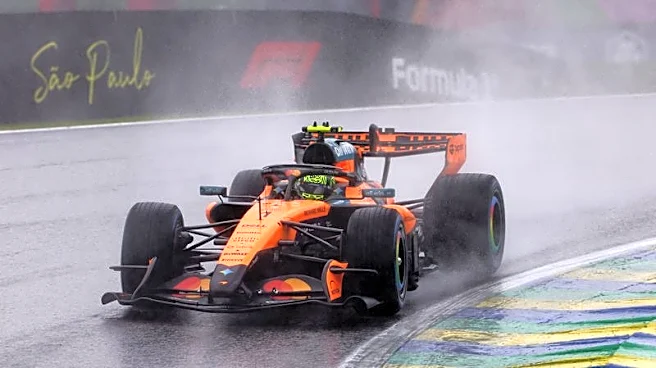
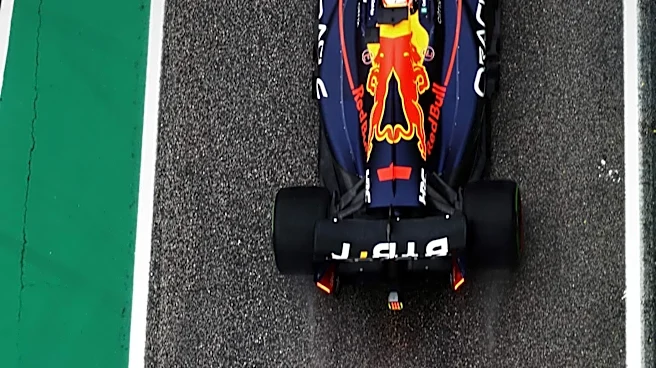
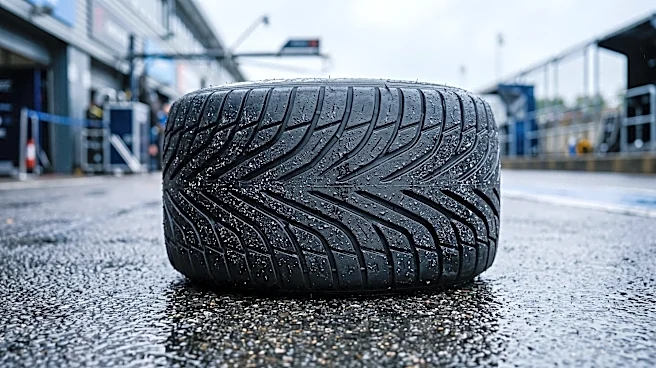
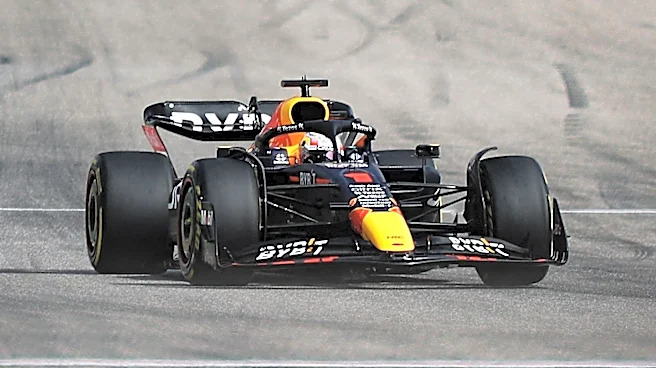
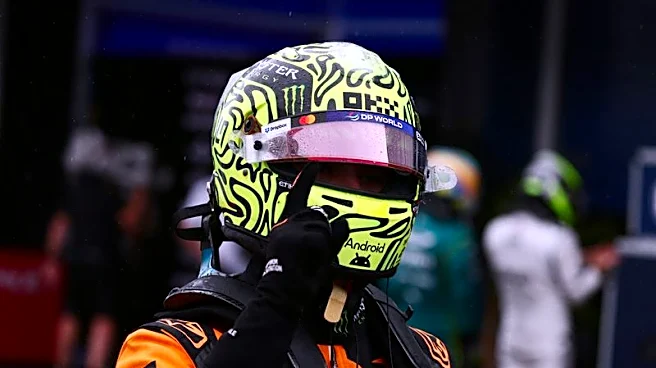
Isack Hadjar, a Red Bull-Ford driver, achieved a third-place finish at the 2026 Sao Paulo Grand Prix, marking his strongest performance since joining the team. The race, characterized by rapidly changing weather conditions, saw Hadjar navigate from intermediate
tires to slicks and back to intermediates. During a crucial late pit stop in wet conditions, Hadjar nearly collided with his pit crew. He praised his mechanics for their composure and efficient execution of the stop, which allowed him to maintain his podium position. The incident did not result in any FIA penalties. Hadjar's performance contributed to a double podium for Red Bull, with teammate Max Verstappen finishing second. This result lifted Hadjar to 122 points in the Drivers' Championship.
Why It's Important?
Hadjar's third-place finish is significant for Red Bull-Ford, demonstrating the team's competitive strength and strategic adaptability in challenging race conditions. His ability to secure a podium position, despite a near-miss in the pit lane and the complexities of tire management, highlights his growing skill and resilience as a Formula 1 driver. This performance adds valuable points to Red Bull's Constructors' Championship campaign and reinforces the team's position among the top contenders. The incident in the pit lane, while ultimately resolved without penalty, underscores the high-pressure environment of Formula 1 and the critical role of pit crew efficiency and driver precision in securing favorable outcomes. For Hadjar, this result could boost his standing within the team and the broader F1 community, potentially influencing future contract negotiations and team strategies.
What's Next?
Following his podium finish in Sao Paulo, Isack Hadjar and the Red Bull team will now focus on the remaining races of the 2026 Formula 1 season, with the next event being the Las Vegas Grand Prix. Hadjar's strong performance, particularly in adverse conditions, will likely increase expectations for his future races. The team will continue to analyze the race data, including the challenging tire transitions and the pit stop incident, to refine strategies and improve operational efficiency. Hadjar's comments regarding the performance of wet-weather tires may also prompt further discussions within the sport about tire development and safety in varying conditions. His consistent performance could solidify his role within Red Bull and potentially lead to further opportunities in the championship.
Beyond the Headlines
The Sao Paulo Grand Prix highlighted not only the technical prowess of the cars and drivers but also the human element of Formula 1, particularly the critical role of the pit crew. Hadjar's near-miss in the pit lane, and his subsequent praise for his team's calm and effective response, underscores the intense pressure and precision required in every aspect of the sport. This event also brings to light the ethical considerations of team orders, as Hadjar was instructed to let Max Verstappen pass, raising questions about individual driver ambition versus team strategy. The challenging weather conditions and the drivers' struggles with tire grip also point to broader discussions within Formula 1 about safety, car design, and the balance between spectacle and driver well-being in extreme racing environments.