






What's Happening?
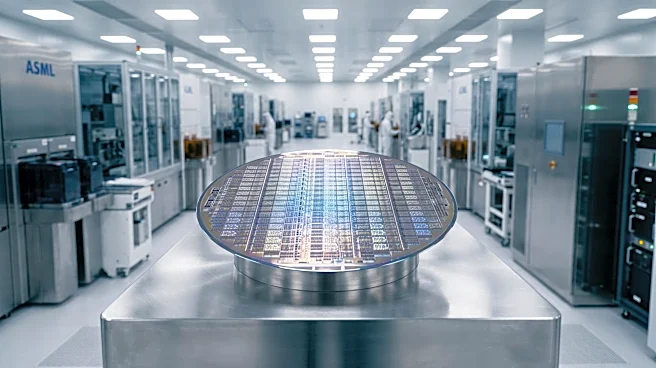
Micron Technology is currently navigating significant challenges, including the halt of its planned Fab 11E in Taoyuan, Taiwan, and increased political scrutiny surrounding AI data center expansions in the U.S. The Taiwan fab project, valued between US$3
billion and US$4.5 billion, was paused due to a profit-sharing dispute with local workers. This disruption is particularly impactful as Taiwan accounts for a substantial portion of Micron's DRAM output, directly affecting the company's ability to meet the growing demand for AI data center memory. Additionally, recent U.S. elections have led to tighter scrutiny of AI data center buildouts, adding another layer of complexity for Micron. These developments are raising questions about Micron Technology's regulatory and labor exposure, highlighting the memory business's dependence on large-scale AI data center demand.
Why It's Important?
The situation is critical for Micron Technology and the broader semiconductor industry, particularly concerning the supply of memory for AI data centers. The halt of the Taiwan fab could lead to prolonged disruptions in new capacity, potentially impacting the availability and pricing of DRAM and NAND products. This could affect U.S. technology companies reliant on these components for their AI infrastructure. The increased political scrutiny of data center expansions in the U.S. introduces regulatory risks that could slow down or alter future buildout plans, affecting Micron's investment narrative around AI-driven memory demand. While tight DRAM and NAND conditions currently support pricing, high fixed costs and potential slowdowns in orders or pricing due to these issues could strain Micron's financial performance, especially given its substantial capital spending plans for fiscal years 2026 and 2027. Investors are closely watching how quickly Micron resolves the Taiwan labor dispute and realigns its buildout plans, as these factors will be crucial for the company's execution and future flexibility.
What's Next?
Micron Technology's immediate next steps will involve resolving the profit-sharing dispute with workers in Taiwan to resume the Fab 11E project. The company will also need to adapt to the increased political scrutiny of AI data center expansions in the U.S., potentially adjusting its buildout strategies and engaging with regulatory bodies. Analysts are re-evaluating their forecasts for Micron, with some previously optimistic projections for revenue and earnings by 2029 potentially changing as the full impact of the fab halt and board retirement news feeds into their models. The company's ability to manage these challenges will determine its capacity to capitalize on the strong demand for AI-driven memory and maintain its market position. The resolution of these issues will be key to Micron's future financial health and its ability to meet the demands of the rapidly expanding AI sector.
Beyond the Headlines
Beyond the immediate financial and operational impacts, these developments highlight broader implications for global supply chains and the geopolitical landscape of technology manufacturing. The reliance on specific regions, like Taiwan for DRAM output, exposes companies to localized labor disputes and political shifts, underscoring the need for diversified manufacturing strategies. The increased scrutiny of AI data center buildouts in the U.S. also reflects a growing governmental interest in the infrastructure supporting advanced technologies, potentially leading to new regulations or incentives that could shape the future of the tech industry. This situation could prompt a re-evaluation of risk management strategies for companies with significant international manufacturing footprints and those heavily invested in critical technological infrastructure, emphasizing resilience and adaptability in an increasingly complex global environment.