







What's Happening?
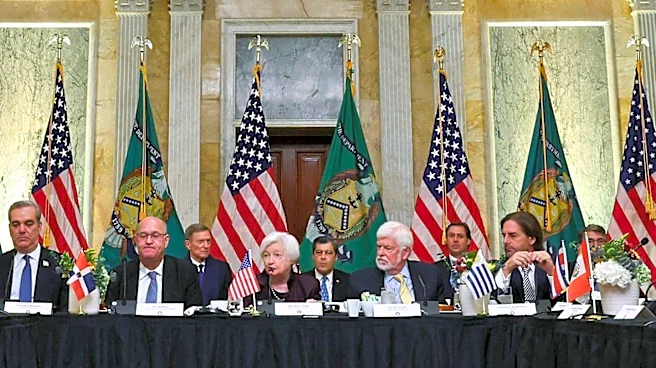
U.S. Treasury Secretary Scott Bessent has positioned dollar-backed stablecoins as a critical component of the nation's strategy to enhance the dollar's international influence and stimulate demand for U.S. government debt. Speaking at a New York event,
Bessent reportedly linked stablecoins with artificial intelligence and semiconductors as vital technologies for U.S. competitiveness. This perspective shifts the focus from stablecoins as speculative crypto instruments to their role as payment infrastructure. The overwhelming majority of stablecoins are dollar-denominated, making them a potential channel for extending dollar use in economies with unstable local currencies. The proposed GENIUS Act framework mandates that payment stablecoin issuers maintain one-to-one backing with cash, eligible U.S. Treasuries, or other permitted liquid reserve assets. This regulatory structure is expected to create a direct link between stablecoin growth and the U.S. government funding market, as increased stablecoin issuance would necessitate acquiring more backing assets, particularly short-term Treasuries.
Why It's Important?
This framing by Treasury Secretary Bessent is significant because it integrates stablecoins into the broader U.S. financial and geopolitical strategy, moving beyond their traditional perception within the crypto market. By promoting stablecoins as a tool for dollar distribution, the U.S. aims to make dollar-denominated payments more accessible globally, potentially increasing demand for dollar liquidity in regions with limited access to U.S. banking services. The requirement for stablecoin issuers to back their tokens with U.S. Treasuries could create a new, substantial buyer base for government debt, particularly short-dated instruments. This could support Treasury market funding conditions and reinforce the dollar's international position. For U.S. businesses and financial institutions, this policy direction signals a growing acceptance and integration of digital assets into the mainstream financial system, potentially opening new avenues for payment processing, remittances, and treasury operations, while also emphasizing the need for robust regulatory compliance.
What's Next?
The success of this strategy hinges on several factors, including the quality of stablecoin reserves, the resilience of redemption mechanisms, and the effective implementation of the emerging regulatory framework, such as the GENIUS Act. Policymakers will need to ensure that regulations are clear and enforceable, and that stablecoin issuers maintain credible reserves. The market will also need to see broader adoption by users and merchants, and major jurisdictions must permit wider payment use. Future developments will likely involve continued coordination among the Treasury, the Securities and Exchange Commission, and the Commodity Futures Trading Commission to establish comprehensive rules for licensing, asset classification, bank access, consumer protection, and enforcement. The ongoing monitoring of stablecoin market capitalization, reserve composition, and redemption patterns will be crucial to assess the actual impact on Treasury demand and the dollar's global role.
Beyond the Headlines
The integration of stablecoins into national financial strategy raises deeper implications regarding financial stability and regulatory oversight. While stablecoins could offer a stable source of demand for Treasuries, their reserve structures, which prioritize liquidity and safety for redemptions, could also transmit stress into money markets during periods of high redemption activity. The challenge lies in balancing the potential benefits of expanded dollar reach and Treasury demand with the need to safeguard against systemic risks. Furthermore, the emphasis on regulatory compliance means stablecoin issuers may increasingly operate like regulated payment institutions, requiring stringent controls over reserve segregation, auditability, and anti-money laundering (AML) measures. This shift could lead to a more transparent and secure digital asset ecosystem, but also higher operational costs and stricter entry barriers for new participants.