





What's Happening?
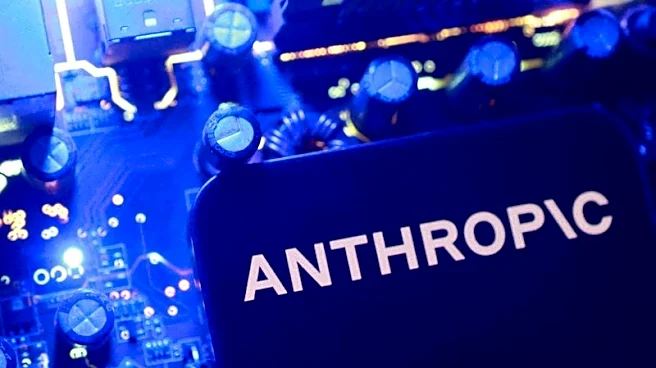
Akamai Technologies, a cloud provider and cybersecurity company, saw its shares surge by as much as 16.4% after announcing an $11.6 billion deal with artificial intelligence platform Anthropic. This seven-year agreement is for dedicated cloud computing
capacity and related managed support services, specifically to support Anthropic's accelerating CPU workload demands. The deal, which has an option to expand up to $20 billion, focuses on central processing units (CPUs) rather than graphics processing units (GPUs), as networks of CPUs are considered more suitable for the coordinated computing tasks required for agentic AI. Analysts at Oppenheimer estimate the deal is worth approximately 77 megawatts of computing power, and Akamai is expected to invest $5.5 billion in capital spending to build out its capacity to fulfill the contract requirements. This commitment contributes to Akamai's total of $14.6 billion in cloud commitments signed year-to-date, with analysts predicting healthy profit margins for this business segment.
Why It's Important?
This significant deal underscores the escalating demand for specialized computing infrastructure driven by the rapid advancements in artificial intelligence. For Akamai, it marks a pivotal shift in its financial profile, transforming it from a 'value' asset to a 'hypergrowth' asset, with its Cloud Infrastructure Services (CIS) segment projected to surpass its Security segment by late 2028. The substantial capital expenditure of $5.5 billion highlights the scale of investment required to support cutting-edge AI development and positions Akamai as a key enabler in the AI ecosystem. The focus on CPUs for agentic AI also suggests a nuanced understanding of AI workload requirements, potentially influencing future infrastructure development trends in the industry. This agreement not only secures a major client for Akamai but also signals a broader trend of AI companies seeking dedicated, large-scale computing resources to power their innovations, impacting the cloud services market and the competitive landscape among infrastructure providers.
What's Next?
Akamai will proceed with building out its capacity to meet the demands of the Anthropic contract, which is expected to involve significant capital spending. The company anticipates that this deal will add between $150 million and $300 million to its revenue in 2027, leading to an increase in its revenue growth estimates. The Master Services Agreement is structured into projects, with this new commitment representing Project 2 and Project 3. There is also an option to broaden the hardware terms of the deal and increase the total value to $20 billion, indicating potential for further expansion. Akamai's management has expressed that they are not finished executing large CPU or GPU-based deals, suggesting continued pursuit of similar contracts in the future. The company will also continue to provide a larger vision for Akamai Cloud, showcasing how CIS is being utilized for various applications like conversational voice agents, robotics, physical AI, and real-time AI video intelligence.
Beyond the Headlines
The deal between Akamai and Anthropic reflects a deeper trend in the technology sector: the increasing specialization and decentralization of AI infrastructure. While GPUs have traditionally been the workhorse for AI training, the emphasis on CPUs for 'agentic AI' suggests a growing recognition of the diverse computational needs within the AI landscape. This could lead to a more diversified market for AI hardware and cloud services, moving beyond a singular focus on GPU-centric solutions. Furthermore, the substantial financial commitment and long-term nature of the contract highlight the strategic importance of securing dedicated computing resources for AI development, potentially leading to more exclusive partnerships and vertical integration within the AI supply chain. This could also raise questions about market concentration and access to critical AI infrastructure for smaller players, shaping the future competitive dynamics of the AI industry.