



What's Happening?
Mexico's fixed investment saw its fastest growth in two years during July, increasing by 6.0% year-over-year. This surge was primarily fueled by robust private-sector spending on machinery and equipment, alongside sustained construction activity. According
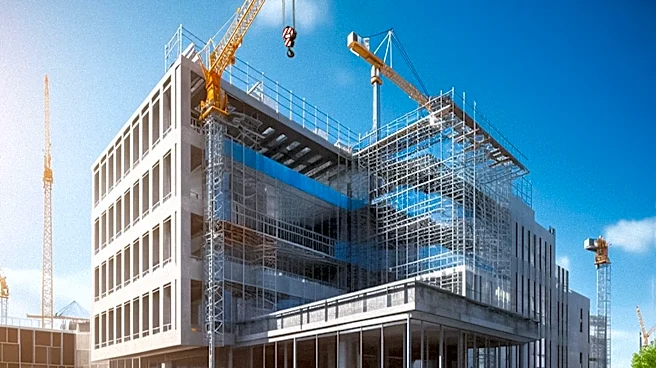
to Mexico's National Institute of Statistics and Geography (INEGI), private investment rose 5.9% annually, marking its highest growth rate in 30 months. Public-sector investment also increased by 6.9%, though at a slower pace compared to the previous month. Construction contributed significantly, growing 6.9% year-over-year, with residential construction up 9.2% and nonresidential construction up 4.0%. Investment in machinery and equipment experienced its highest annual increase in 23 months, rising by 4.9%. Notably, domestic machinery and equipment investment declined by 3.1%, while imported machinery and equipment saw a 14% increase, indicating a trend of companies acquiring foreign-made equipment to modernize or expand production.
Why It's Important?
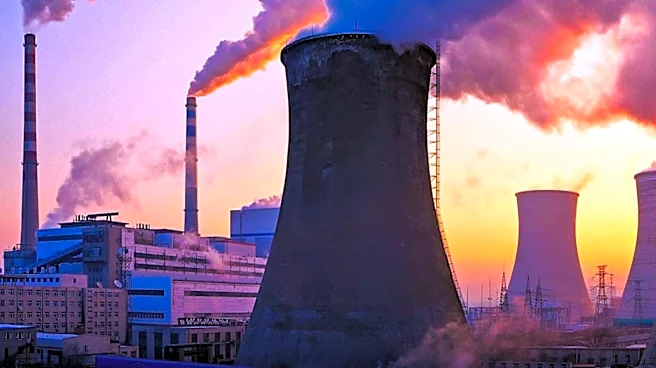
This rebound in Mexico's fixed investment is crucial for the U.S. economy due to the interconnectedness of their manufacturing and supply chains, particularly under nearshoring trends. Increased investment in Mexican industrial parks and manufacturing capacity, driven by imported machinery, suggests a strengthening of production capabilities that can serve the North American market. As U.S. companies seek to diversify supply chains and bring production closer to home, a more robust Mexican manufacturing base can offer significant advantages, potentially reducing lead times and logistical costs. The emphasis on imported machinery also highlights opportunities for U.S. manufacturers of industrial equipment. However, the sustainability of this growth hinges on addressing infrastructure challenges, particularly power availability and grid capacity, which could impact the long-term viability of expanded industrial operations and, by extension, U.S. companies relying on Mexican production.
What's Next?
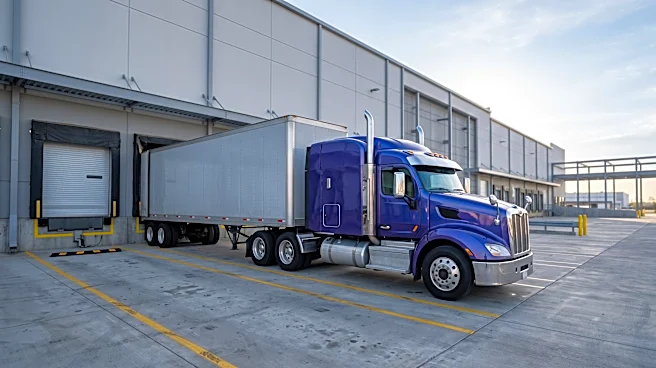
The Mexican Association of Private Industrial Parks (AMPIP) projects a substantial increase in industrial park investment, expecting to reach US$5.83 billion in 2026, a 36.6% rise from 2025. The majority of this capital, 66.1%, is slated for new industrial park developments and new buildings within existing parks, with another 19.3% allocated to upgrading current parks. This anticipated expansion suggests continued growth in Mexico's manufacturing and logistics infrastructure. Economists, while acknowledging the investment recovery, remain cautious about its sustained nature, citing the need for stronger business confidence and the potential limitations posed by weaker public investment. The expansion of e-commerce is also creating new demand for industrial real estate, particularly for specialized facilities. Addressing power availability and grid readiness will be critical for Mexico to sustain its industrial expansion and attract further investment.
Beyond the Headlines
The shift towards increased investment in imported machinery and equipment in Mexico reflects a broader strategic move by companies to enhance productive capacity and modernize operations. This trend is not merely about capital expenditure but signifies a deeper integration into global technological advancements and efficiency standards. The focus on industrial park development and upgrades also points to a structured approach to accommodating nearshoring initiatives, which could reshape regional supply chains and manufacturing hubs. The challenges related to power infrastructure, however, underscore a critical bottleneck that could impede Mexico's potential as a manufacturing powerhouse. Overcoming these infrastructure hurdles will require significant public and private sector collaboration, potentially influencing policy decisions and investment priorities in energy and utilities. The long-term implications include a more resilient and geographically diversified manufacturing base for North America, but also a heightened need for sustainable energy solutions to support industrial growth.