






What's Happening?
Justin Ishbia, the minority owner of the Chicago White Sox and the individual slated to eventually take control of the franchise, has publicly stated that current majority owner Jerry Reinsdorf retains full authority over key team decisions, including
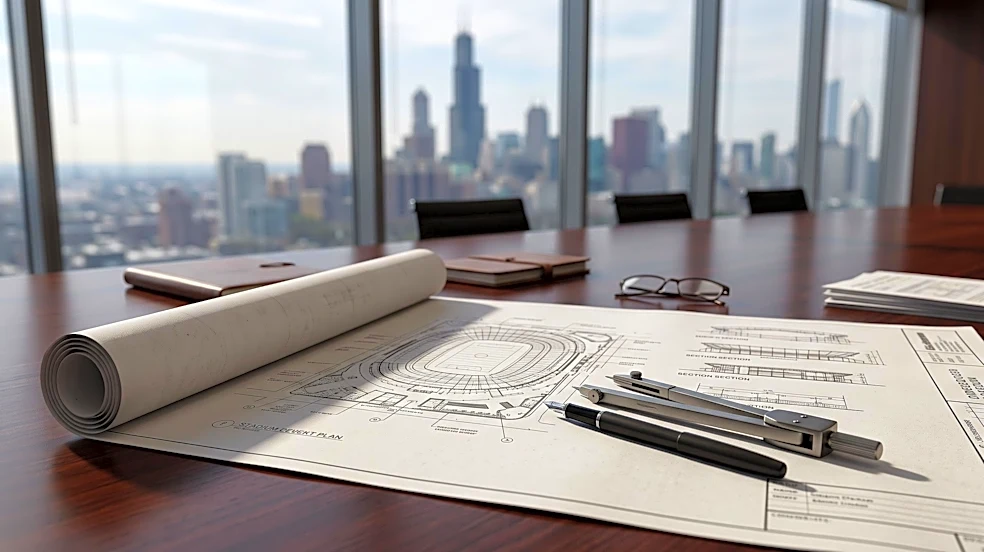
any potential relocation from Guaranteed Rate Field in Bridgeport. Ishbia, who has acquired land in the South Loop for a potential new stadium development known as 'The Railyards,' emphasized that Reinsdorf is 'in charge until the day he says he's not.' This clarification comes amidst ongoing discussions about the White Sox's future home, with their lease at Guaranteed Rate Field expiring at the end of the 2029 season. Ishbia envisions a privately financed stadium as an anchor for a larger mixed-use development, connecting downtown Chicago with the South Loop and Chinatown. The proposed site for 'The Railyards' is currently an Amtrak maintenance facility, and its relocation has drawn opposition from Bridgeport residents.
Why It's Important?
This development is significant for several reasons, impacting Chicago's urban planning, economic development, and the future of a major sports franchise. The potential move of the White Sox from Bridgeport to the South Loop could trigger a massive redevelopment project, transforming a currently underutilized area into a vibrant entertainment and residential district. Ishbia's vision for a privately financed stadium sets a precedent for future sports infrastructure projects, potentially reducing the burden on taxpayers. However, the relocation of the Amtrak facility, a prerequisite for the stadium, has generated local opposition, highlighting the complexities of large-scale urban development and community displacement concerns. The decision also holds considerable weight for the White Sox fan base, as a new stadium could offer a modernized experience but also alter long-standing traditions and community ties associated with their current home.
What's Next?
The immediate next steps involve Jerry Reinsdorf's decision regarding the White Sox's future stadium location. While Ishbia has acquired land and presented a vision for 'The Railyards,' the final say rests with Reinsdorf. The relocation of the Amtrak maintenance facility is also a critical component, and Amtrak's plans to build a new facility in Bridgeport are facing opposition from local residents and Alderman Nicole Lee. Ishbia has indicated that decisions regarding Amtrak's move are entirely up to Amtrak. Should Reinsdorf decide to pursue a new stadium at 'The Railyards,' further negotiations and public engagement will be necessary to address community concerns, particularly those of Bridgeport residents regarding the Amtrak facility and the future of the current ballpark site. Ishbia is positioned to assume control of the White Sox between 2029 and 2033, at which point he would have direct influence over such decisions.
Beyond the Headlines
Beyond the immediate question of a new stadium, this situation highlights broader themes of urban revitalization, the role of sports franchises as community assets, and the balance between private development and public interest. Ishbia's philosophy, emphasizing that sports teams are 'community assets' rather than personal ones, suggests a long-term vision for the White Sox that extends beyond on-field performance to include significant civic engagement and economic impact. The proposed 'Railyards' development aims to create a comprehensive district with entertainment, residential, business, and public spaces, potentially reshaping the urban fabric of Chicago. This project could serve as a model for how major cities integrate sports facilities into larger urban development strategies, focusing on creating vibrant, interconnected communities. However, it also underscores the challenges of managing community concerns and ensuring equitable development in such ambitious undertakings.