








What's Happening?
The Bureau of Labor Statistics has released new data indicating that more than one-third of employees in the United States continue to work from home, despite stricter return-to-office mandates implemented by employers. The American Time Use Survey for
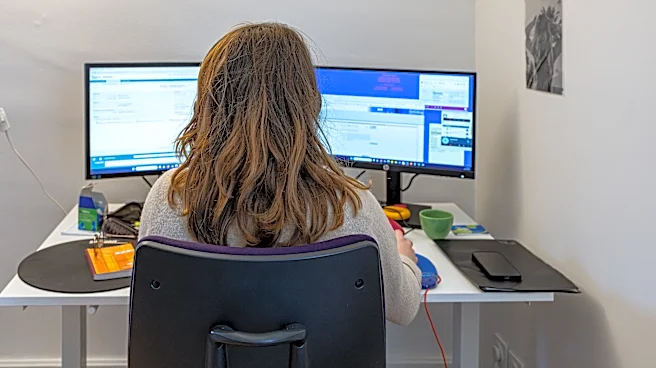
2025 shows an increase in remote work, with 35% of employed individuals working remotely at least part of the time, up from 33% in 2024. The data highlights that workers with a bachelor's degree or higher are more likely to engage in remote work. Additionally, women are more inclined to work from home compared to their male counterparts, often balancing childcare and household responsibilities. This trend persists even as employers enforce stricter office attendance policies, with many employees favoring the flexibility of remote or hybrid work models.
Why It's Important?
The continued preference for remote work among employees has significant implications for workplace dynamics and employer strategies. As companies enforce stricter office attendance, the pushback from employees underscores a shift in work culture towards valuing flexibility and autonomy. This trend could influence future employment policies and the design of workspaces, as businesses may need to accommodate hybrid models to attract and retain talent. The data also highlights ongoing gender disparities, as women often choose more flexible roles to manage family responsibilities, contributing to the gender pay gap. The persistence of remote work could lead to broader discussions on work-life balance and equitable workplace practices.
What's Next?
As remote work remains prevalent, companies may need to reassess their return-to-office strategies to align with employee preferences. This could involve developing more robust hybrid work models that balance in-office collaboration with remote flexibility. Employers might also explore new technologies and tools to enhance remote collaboration and productivity. Additionally, the ongoing trend may prompt policymakers to consider regulations that support flexible work arrangements and address gender disparities in the workplace. The evolving work environment could lead to innovative approaches in managing workforce dynamics and redefining career success.