










What's Happening?
The latest data from S&P Global indicates a mixed economic outlook for the U.S. as the Composite Purchasing Managers Index (PMI) rose to 52.2 in June, up from 51.5 in May. This improvement marks the third consecutive month of growth in business activity.
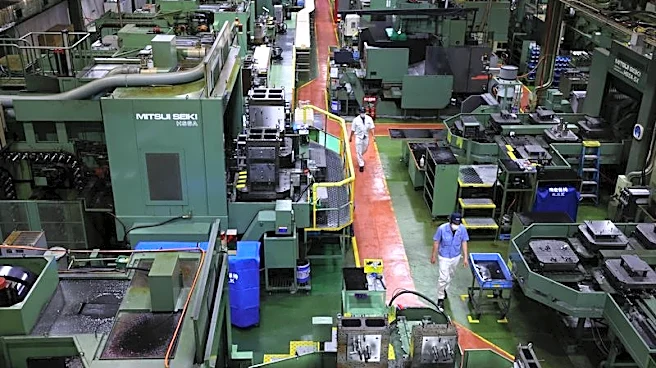
However, the growth rate remains weaker compared to earlier in the year. The service sector's PMI increased to 51.3, surpassing expectations, while the manufacturing sector's PMI rose to 55.7, also exceeding forecasts. Despite these improvements, companies are cutting back on staffing levels due to concerns over rising overheads and raw material costs. The manufacturing sector, in particular, is experiencing significant job cuts, the highest since 2009, excluding the pandemic period. Input price inflation has cooled but remains historically high, maintaining an elevated rate of selling price inflation.
Why It's Important?
The current economic indicators suggest a sluggish growth trajectory for the U.S. economy, with the PMI data signaling a struggle to grow beyond a 1% annualized rate in the second quarter. The disparity between the service and manufacturing sectors highlights an unbalanced economy, where strong manufacturing demand contrasts with sluggish service demand. The job cuts in the manufacturing sector raise concerns about the sustainability of recent demand upturns and the impact of escalating raw material costs. This situation could lead to broader economic implications, affecting consumer confidence and spending, which are critical for economic recovery. The cooling of input price inflation, partly due to lower energy prices, offers some relief but does not fully offset the challenges posed by high overheads and raw material costs.
What's Next?
The U.S. economy may continue to face challenges as businesses navigate high costs and supply chain issues. The manufacturing sector's reliance on inventory building amid supply fears suggests potential vulnerabilities if demand does not sustain. Policymakers and business leaders will need to monitor these developments closely, potentially adjusting strategies to support employment and manage inflationary pressures. The ongoing economic conditions may prompt further analysis and intervention to stabilize growth and address sector-specific challenges.