





What's Happening?
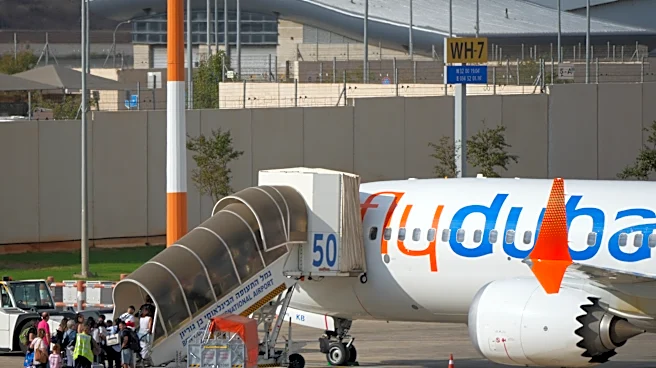
Akasa Air CEO Vinay Dube has stated that a recently identified software glitch in the Boeing 737 MAX aircraft will not affect the airline's operational continuity, new aircraft delivery schedules, or induction timelines. The software issue, which Boeing informed
buyers about in August, can affect automated flight guidance during a very specific landing maneuver, requiring pilots to fly the aircraft manually. Dube clarified that this is not a universal software issue and that Akasa Air has not encountered this specific situation in its four-and-a-half years of operations. The airline currently operates 43 Boeing 737 MAX aircraft and has a total order for 226 planes, with phased deliveries scheduled through 2032. Boeing is reportedly working on a software fix, and the Directorate General of Civil Aviation (DGCA) is aware of the situation.
Why It's Important?
This announcement from Akasa Air is crucial for maintaining confidence in the Boeing 737 MAX fleet, especially given its past safety concerns. For the U.S. aerospace industry, particularly Boeing, the assurance from a major international customer like Akasa Air helps mitigate potential negative perceptions and financial impacts that could arise from another software-related issue. The FAA's determination that the glitch is not a flight-safety issue further supports this, potentially preventing widespread delivery delays or order cancellations from other airlines globally, including U.S. carriers. The continued acceptance and operation of the 737 MAX by airlines like Akasa Air are vital for Boeing's recovery and future sales, as well as for the stability of the global aviation supply chain that includes many U.S. companies. Any disruption could have ripple effects on manufacturing, employment, and investor confidence in the U.S. aviation sector.
What's Next?
Boeing is actively working on a software fix to address the identified glitch. While the FAA has stated that the issue will not prevent the certification of the Boeing 737-10, it remains uncertain whether some customers, including U.S. carriers like Southwest Airlines and United Airlines, will accept new aircraft without the software updates. Boeing will issue a special bulletin detailing how pilots can recognize and respond to the malfunction, and the FAA also plans to issue its own bulletin. The situation highlights the ongoing scrutiny of Boeing's software and safety protocols. The resolution of this issue and the acceptance of updated aircraft by airlines will be critical for Boeing's delivery targets and its reputation in the coming months and years.
Beyond the Headlines
The recurring nature of software-related issues in the Boeing 737 MAX, even if deemed non-critical by regulators, points to deeper systemic challenges in software development and integration within complex aerospace systems. This situation underscores the delicate balance between technological advancement, regulatory oversight, and public trust in the aviation industry. While the FAA's quick assessment aims to prevent panic, the cumulative effect of such incidents can erode confidence among airlines and the flying public. This could lead to increased demands for transparency, more rigorous pre-certification testing, and potentially a shift in how software changes are managed and communicated across the industry. The long-term implication is a heightened focus on software integrity and cybersecurity in aircraft, potentially driving new industry standards and practices that could influence U.S. aerospace engineering and regulatory frameworks.