




What's Happening?
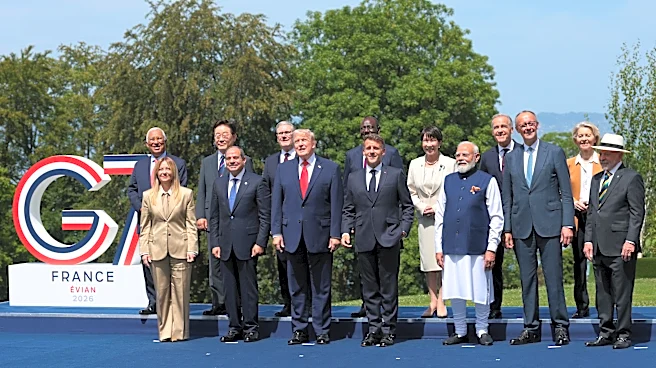
Economic optimism across the Group of Seven (G7) nations has plummeted in 2026, reaching levels last observed during the 2009 global financial crisis. A Gallup survey indicates that only 22% of individuals in G7 countries believe their local economy is improving,
marking a 13 percentage point decrease from 35% in 2025. Conversely, the proportion of people who feel their local economy is deteriorating has surged to 66%, surpassing levels recorded during the financial crisis. This pessimistic sentiment is widespread, with optimism declining in all seven G7 member states. For instance, in the United States, optimism has fallen to 29%, matching its previous low. Canada, Germany, and the United Kingdom have all registered new all-time lows in economic optimism, at 22%, 19%, and 13% respectively. This decline in public sentiment contrasts with the relatively stable, albeit low, real GDP growth observed across the G7 since 2023, according to the International Monetary Fund.
Why It's Important?
The sharp decline in economic optimism within G7 nations, including the United States, signals a significant disconnect between official economic indicators and public perception. This divergence is crucial because sustained public pessimism can influence consumer spending, investment decisions, and overall economic activity, potentially hindering recovery efforts or exacerbating economic slowdowns. The Gallup survey highlights that while GDP growth has remained stable, real wages have only recently returned to pre-decline levels after being impacted by inflation following the 2022 conflict in Ukraine. This suggests that the benefits of economic growth are not being felt by the average citizen, leading to widespread dissatisfaction. For U.S. policymakers, this data underscores the challenge of not only fostering economic growth but also ensuring that its positive effects are tangible in the daily lives of the populace. A lack of public confidence can also create political instability and pressure on governments to implement more direct relief measures, even if macroeconomic figures appear stable.
What's Next?
In response to the widespread economic pessimism, G7 governments, including the U.S. administration, may face increased pressure to implement policies that directly address household financial concerns and improve real wages. This could involve further fiscal stimulus, targeted relief programs, or measures aimed at controlling inflation and increasing purchasing power. The divergence between public sentiment and GDP trends suggests that traditional economic metrics alone may not be sufficient for assessing the health of an economy from the perspective of its citizens. Future policy discussions within the G7 are likely to focus on how to bridge this gap and ensure that economic growth translates into tangible improvements in living standards. Additionally, there may be a push for more nuanced economic indicators that better capture the lived experiences of the population, beyond just GDP figures. Governments will need to communicate more effectively about economic progress and its impact on everyday life to rebuild public trust and optimism.
Beyond the Headlines
The growing disparity between economic data and public sentiment in G7 countries, particularly the U.S., points to a deeper societal issue where traditional economic models may no longer fully capture the public's financial reality. This could lead to a re-evaluation of what constitutes economic success and how it is measured. The emphasis on real wages and purchasing power over aggregate GDP suggests a shift towards more human-centric economic policies. Ethically, this raises questions about equitable distribution of economic gains and whether current systems adequately protect citizens from inflationary pressures. Legally, there might be calls for stronger consumer protection laws or wage policies to ensure that economic growth benefits a broader segment of the population. Culturally, persistent economic anxiety, even amidst stable GDP, could foster a sense of disillusionment with established economic systems and political leadership, potentially leading to increased social unrest or shifts in voting patterns. This trend highlights the need for a more holistic approach to economic governance that prioritizes the well-being of individuals alongside national economic output.