





What's Happening?
Guinea has surpassed South Africa and Canada in seaborne iron ore exports, with China emerging as its primary customer. This significant shift in global trade dynamics is largely attributed to the new West African mine and rail system, a project in which
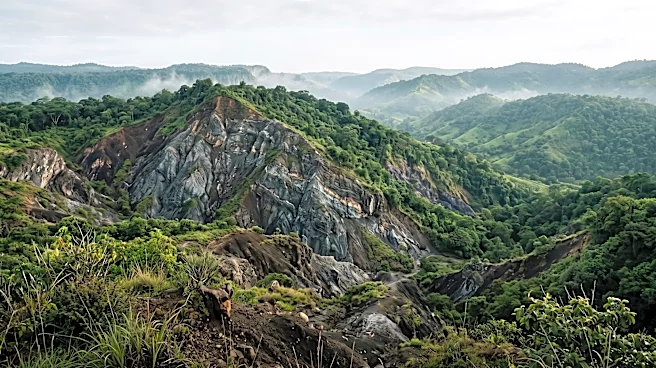
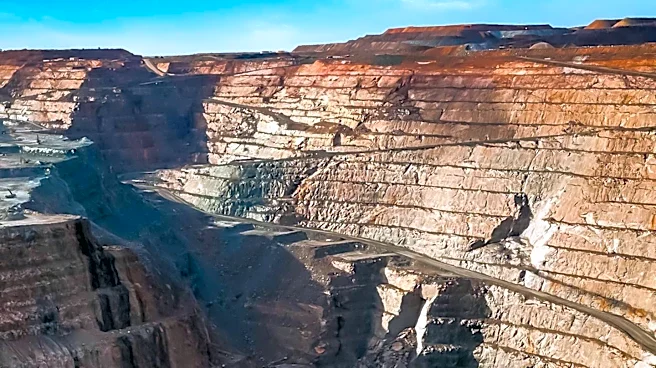
Rio Tinto is a major partner. The Simandou project, located in Guinea's southern highlands, encompasses mining blocks, a long heavy-haul railway, and a new deep-water port on the Atlantic coast, designed to extract and transport high-grade hematite. The northern Simandou mine commenced its next production series in early November, transitioning the mine, railway, and port from construction to operational phases. This development follows Rio Tinto's mid-October quarterly production report, which indicated an increase in Pilbara iron ore sales both year-on-year and quarter-on-quarter in the September quarter, with the company maintaining its full-year production and cost guidance. Rio Tinto is also advancing replacement mines in the Pilbara, including the Western Range project developed with China's largest steelmaker.
Why It's Important?
The rise of Guinea as a major iron ore exporter, facilitated by Rio Tinto's Simandou project, has significant implications for the global iron ore market. This development introduces a new, substantial source of high-grade hematite, potentially diversifying supply chains and influencing pricing dynamics. For the U.S. and its allies, a more diversified global iron ore market could offer greater stability and reduce reliance on traditional suppliers, impacting industries that depend on steel production, such as manufacturing and infrastructure development. China's role as Guinea's largest customer highlights evolving trade relationships and resource acquisition strategies. The project's success could also set a precedent for large-scale infrastructure and mining developments in West Africa, attracting further foreign investment and potentially altering regional economic landscapes. The logistical challenges associated with reaching Simandou's ultimate annual export target underscore the complexities and scale of such mega-projects.
What's Next?
The immediate focus for the Simandou project will be on optimizing the performance of its integrated system, ensuring that long-distance rail haulage, port loading, and ship scheduling operate cohesively to build cargo volumes. Industry commentators are closely watching how quickly the full system will achieve its peak rate and whether it can meet its ambitious annual export targets, which are described as a significant logistical test. The continued development of replacement mines in the Pilbara by Rio Tinto, including the Western Range project with China's largest steelmaker, indicates ongoing efforts to maintain and expand iron ore production capacity. Future developments will likely involve monitoring the project's environmental and social impacts, as well as its long-term economic contributions to Guinea and the broader global iron ore market.
Beyond the Headlines
The Simandou project represents more than just a mining operation; it is a monumental infrastructure undertaking that could reshape geopolitical and economic relationships. The involvement of a major global mining company like Rio Tinto in such a large-scale project in West Africa highlights the strategic importance of securing raw materials for industrial growth, particularly for nations like China. The project's success could lead to increased scrutiny of the environmental and social governance practices of multinational corporations operating in developing countries. Furthermore, the logistical complexities involved in bringing such a remote and extensive project to full operational capacity underscore the challenges and innovations required in modern resource extraction. The shift in iron ore export rankings also reflects a broader trend of emerging economies playing a more significant role in global commodity markets, potentially leading to new trade alliances and economic dependencies.