


What's Happening?
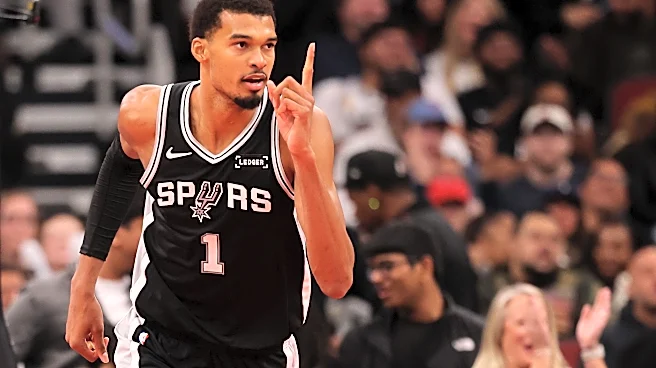
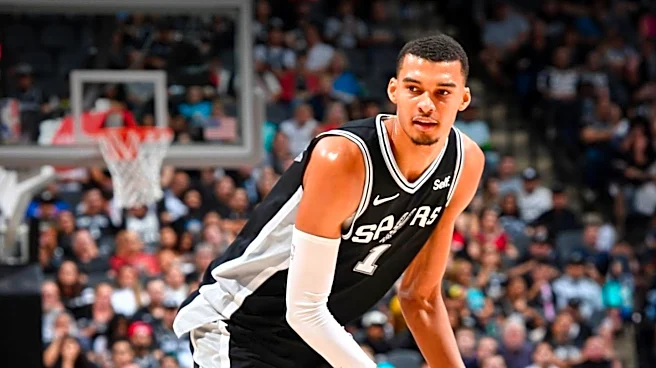
The San Antonio Spurs are experiencing a significant performance gap depending on whether their star player, Victor Wembanyama, is on the court. Through 15 games, the team has outscored opponents by 263 points when Wembanyama is playing. Conversely, the Spurs have
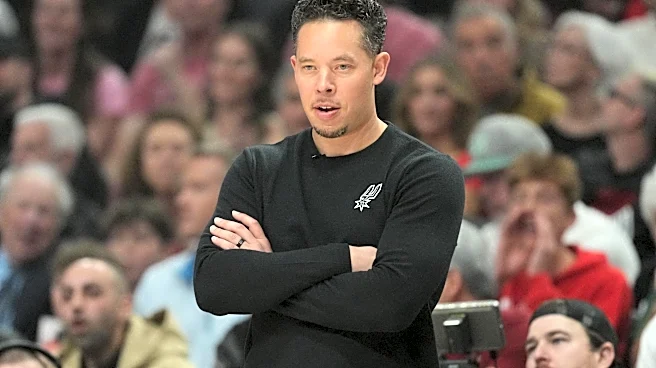
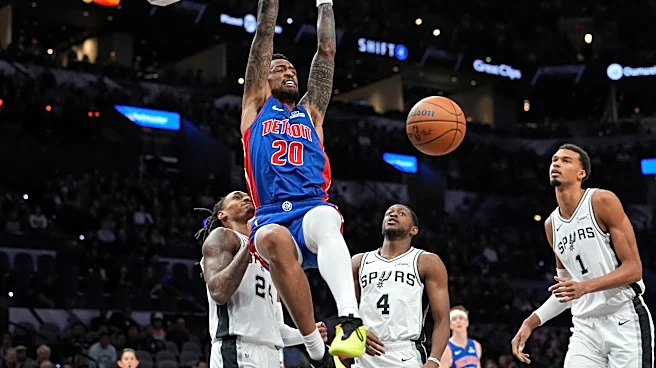
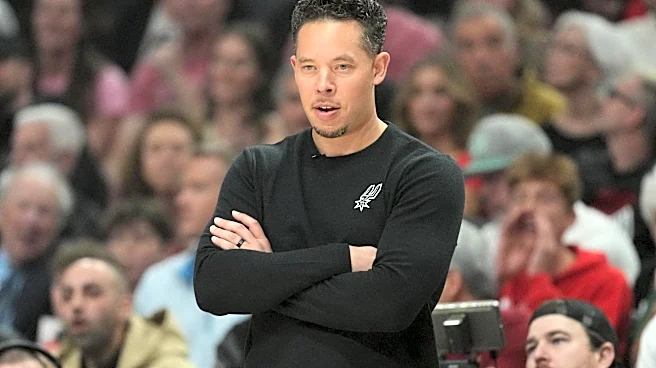
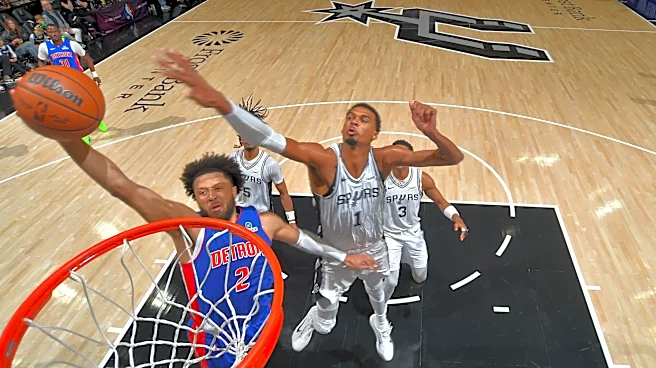
been outscored by 68 points when backup center Luke Kornet is on the floor, who has not shared minutes with Wembanyama. This disparity highlights the team's heavy reliance on Wembanyama's presence. In their 12 wins, the Spurs outscored opponents by 257 points with Wembanyama, but were outscored by 34 points with Kornet. Even in their three losses, the team maintained a positive point differential with Wembanyama. Coach Mitch Johnson acknowledged the challenge, noting the team's performance is "very different when Victor’s in the game when he’s not." The issue was evident in a recent loss to the Detroit Pistons, where the Spurs outscored the Pistons by six points during Wembanyama’s minutes but were outscored by 18 with Kornet, resulting in a 24-point swing.
Why It's Important?
This situation underscores a critical challenge for the San Antonio Spurs: developing a competitive strategy that does not solely depend on one player. While Wembanyama's impact is undeniable, the significant drop-off in performance without him suggests a lack of depth or a systemic issue in how the team adapts to his absence. This reliance could hinder the team's long-term success and playoff aspirations, as star players inevitably require rest or may face injuries. For the NBA, it highlights the immense value of generational talents like Wembanyama but also raises questions about team construction and coaching strategies to maintain consistency. The struggle to perform without their centerpiece could affect fan engagement and the team's marketability, as sustained success often requires a more balanced roster. The team's ability to address this issue will be crucial for its future trajectory in the league.
What's Next?
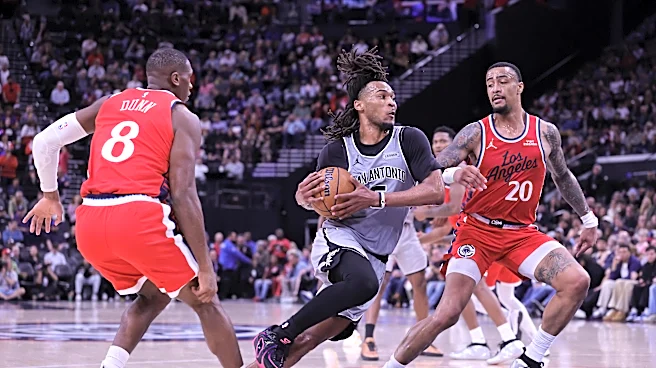
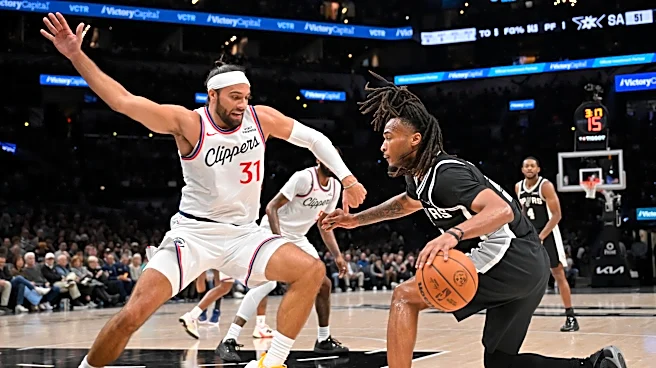
The San Antonio Spurs' immediate focus will be on finding ways to remain competitive during Wembanyama's time off the court. Coach Mitch Johnson and the coaching staff will need to devise new strategies and rotations that mitigate the performance drop-off. This could involve empowering other players to take on larger roles, adjusting offensive and defensive schemes, or exploring potential roster changes to add more reliable depth. Wembanyama himself has expressed a desire to impact the team even from the bench, suggesting he may take on a more vocal leadership role. The team's upcoming game against the Los Angeles Clippers on November 19, 2026, will be another test of their ability to manage minutes and maintain performance. The Spurs will need to demonstrate progress in this area to prove they are more than a one-player team and to build a sustainable winning culture.
Beyond the Headlines
The Spurs' predicament extends beyond mere game statistics; it touches upon the broader philosophical debate in sports regarding team-building around a superstar. While having a dominant player is a clear advantage, the current situation suggests an over-reliance that could stifle the development of other players and create a fragile team dynamic. Ethically, it raises questions about player workload management and the pressure placed on a single individual to carry a franchise. From a strategic standpoint, it challenges the coaching staff to innovate and create a system that can thrive even when the primary offensive and defensive anchor is not present. This scenario could serve as a case study for other NBA teams on the importance of developing a robust supporting cast and adaptable game plans, ensuring that the team's success is not solely contingent on the presence of one extraordinary talent.