
What's Happening?
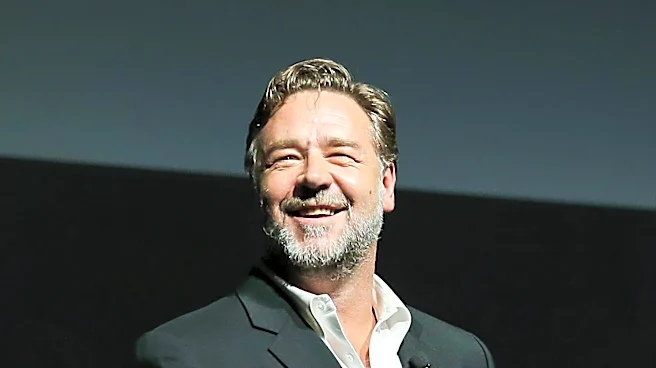
Actor Russell Crowe, known for films such as 'The Quick and The Dead' and '3:10 to Yuma,' owns a 1,400-acre ranch in Nana Glen, Australia. This property serves as a retreat from the demands of Hollywood, offering him a sense of balance and healing. Crowe has
described the ranch as a place that can 'fix anything,' provided one allows it to do its job and becomes part of the environment. His routine on the ranch involves waking with the sun, working with animals, and performing various tasks like fixing fences. This engagement with the land and its daily demands helps him achieve a state of equilibrium. The ranch also holds significant personal history for Crowe, as it was the location where he married Danielle Spencer and where his father, John, resided before his passing in 2021. Additionally, parts of the ranch were affected by bushfires in 2019.
Why It's Important?
Crowe's experience highlights a growing trend among public figures and individuals seeking refuge from high-pressure environments by embracing a more rural or 'western' lifestyle. This move towards self-sufficiency and connection with nature can offer significant mental and emotional benefits, contrasting sharply with the fast-paced, often stressful demands of modern urban and professional life. For many, the idea of a ranch or farm represents a return to fundamental values and a simpler existence, providing a tangible way to de-stress and reconnect with personal well-being. This trend also underscores the universal human need for balance and a sense of belonging, even for those in the public eye, influencing broader societal conversations about work-life balance and the pursuit of happiness outside conventional success metrics.
What's Next?
While the source does not specify immediate future plans for Crowe's ranch, it implies a continued commitment to this lifestyle as a means of personal well-being. The ongoing appeal of such retreats for celebrities suggests that more public figures may continue to invest in similar properties, potentially influencing others to explore rural living or engage in activities that promote a connection with nature. This could lead to increased interest in sustainable living, agricultural practices, and eco-tourism in areas known for their natural beauty and tranquil environments. For Crowe, the ranch will likely remain a vital part of his life, offering a consistent source of grounding amidst his professional endeavors.
Beyond the Headlines
The narrative of celebrities like Russell Crowe finding 'healing powers' in ranch life touches upon deeper societal implications regarding mental health and the search for authenticity. In an era dominated by digital connectivity and constant public scrutiny, the desire to disconnect and engage in tangible, physical work on a ranch represents a counter-cultural movement. This pursuit of a 'balanced' life, away from the artificiality of fame, suggests a re-evaluation of what constitutes true wealth and fulfillment. It also subtly critiques the relentless pace of modern life, advocating for a return to simpler, more grounded routines that foster mental resilience and emotional stability. The appeal of such a lifestyle extends beyond mere escapism, pointing to a fundamental human need for purpose, connection to the natural world, and a sense of control over one's immediate environment.