



What's Happening?
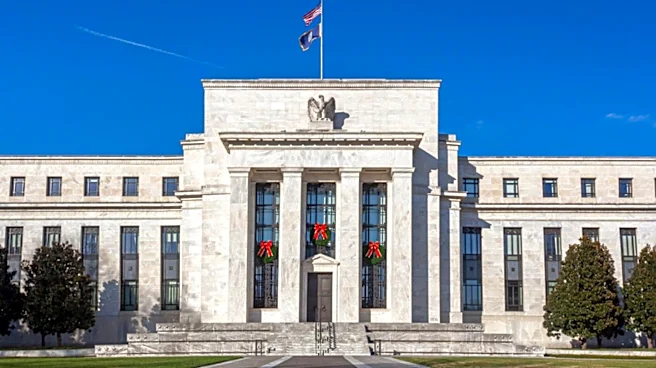
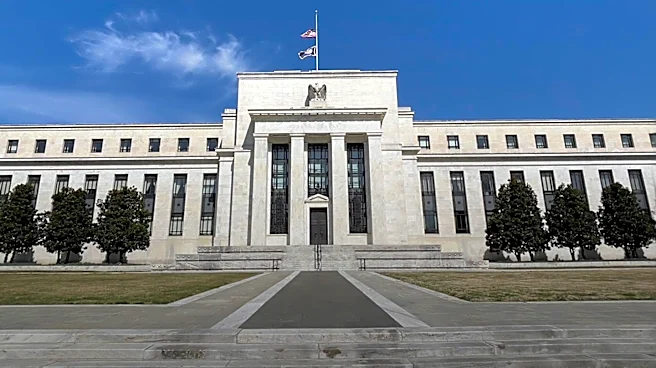
Federal Reserve Governor Christopher Waller recently attempted to influence market expectations by publicly advocating for a half-point (50-basis-point) rate hike at the upcoming December Federal Open Market Committee (FOMC) meeting, suggesting the need
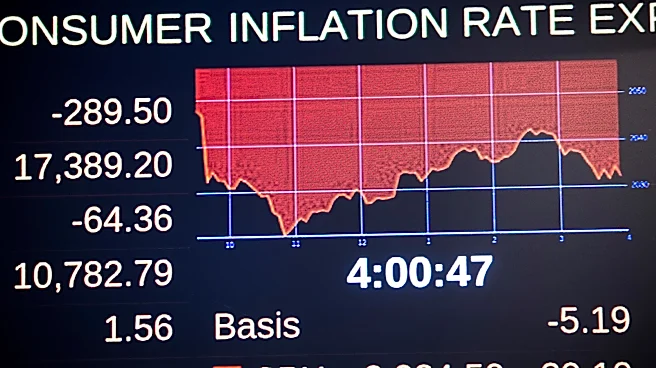
to 'shock people.' However, this traditional method of 'jawboning,' where Fed officials use their statements to guide markets, proved largely ineffective. The Secured Overnight Financing Rate (SOFR) futures market, which indicates traders' expectations for short-term interest rates, showed only a minimal and temporary reaction to Waller's remarks. This contrasts sharply with the past, when statements from Fed chairs like Jerome Powell could significantly move markets. The lack of market response is attributed to the new communication strategy implemented by Fed Chair Kevin Warsh, which aims to reduce 'forward guidance' and encourage markets to focus on data and committee decisions rather than individual speeches.
Why It's Important?
The ineffectiveness of Governor Waller's 'jawboning' highlights a significant shift in the Federal Reserve's influence over financial markets. Historically, the pronouncements of Fed officials, particularly the chair, could trigger substantial market movements. This power allowed the Fed to manage expectations and guide economic behavior. Under Chair Warsh's new approach, which prioritizes less public communication and reduced forward guidance, the market's reliance on individual speeches as policy signals is diminishing. This change means that investors must now focus more intently on economic data and the collective decisions of the FOMC, rather than anticipating policy shifts based on individual remarks. The fading power of 'jawboning' could lead to a more data-driven and potentially less predictable market environment, impacting how businesses and investors plan for future interest rate changes and economic conditions.
What's Next?
The apparent failure of Governor Waller's attempt to influence markets through public statements suggests that the Federal Reserve's communication strategy under Chair Warsh is effectively altering market behavior. This indicates that future market participants will likely place less weight on individual Fed officials' speeches and more on official policy announcements and economic indicators. This shift could lead to a more disciplined market that reacts primarily to concrete data and FOMC votes. Other Fed officials, such as New York Fed President John Williams, have also indicated a preference for a gradual pace of rate hikes, further reinforcing the idea that a consensus-driven, data-dependent approach is prevailing over individual 'jawboning.' This trend implies that the Fed's influence will be exerted through its actions and collective decisions, rather than through anticipatory rhetoric, requiring investors to adapt their analytical frameworks.
Beyond the Headlines
The decline in the effectiveness of 'jawboning' by Federal Reserve officials represents a deeper cultural and operational change within the institution. For decades, the ability of Fed leaders to move markets with their words was a powerful, albeit sometimes controversial, tool for monetary policy. Chair Warsh's deliberate effort to end 'forward guidance' reflects a philosophical stance that markets should not look to the Fed for their next trade, but rather assess underlying economic fundamentals. This could foster a more robust and independent market, less prone to speculative reactions based on verbal cues. However, it also places a greater burden on market participants to interpret complex economic data and policy signals without the benefit of explicit guidance. The long-term implications could include a more resilient market less susceptible to emotional swings, but also one that might experience sharper, less anticipated adjustments when policy changes are enacted without prior verbal signaling.