



What's Happening?
The LoRa Alliance has announced that LoRaWAN technology is becoming the preferred connectivity method for smart agriculture, enabling remote farm monitoring at scale. LoRaWAN, a low-power wide-area network (LPWAN) technology, is particularly suited for agriculture due
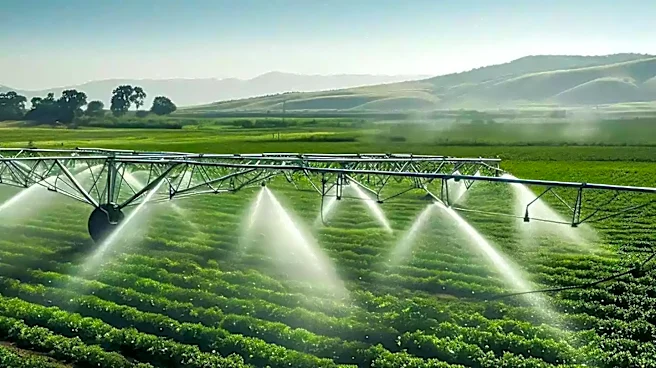
to its long-range, low-power, and low-cost features. It allows farmers to deploy their own networks in remote areas, far from existing infrastructure, using free, unlicensed spectrum. This technology supports a wide range of applications, including soil moisture and temperature monitoring, precision irrigation, and livestock tracking. With over 125 million devices connected worldwide by the end of 2025, LoRaWAN is transforming isolated fields into connected, intelligent environments, enhancing productivity and sustainability.
Why It's Important?
The adoption of LoRaWAN in agriculture is significant as it addresses the challenges of connecting remote and distributed farming environments. By providing real-time data on environmental conditions, LoRaWAN helps farmers optimize resource use, reduce waste, and improve crop health. This technology is particularly beneficial in areas where traditional cellular or Wi-Fi networks are unavailable or impractical. The ability to monitor and manage agricultural operations remotely can lead to increased efficiency and reduced labor costs. Furthermore, the open standard nature of LoRaWAN allows for scalability, enabling farms to start with a single application and expand over time without additional infrastructure investments.
What's Next?
As LoRaWAN continues to gain traction in the agricultural sector, more farms are expected to adopt this technology to enhance their operations. The potential for integrating satellite connectivity with LoRaWAN could further extend its reach to even more remote areas, providing comprehensive coverage for large-scale agricultural operations. Additionally, the development of new applications and devices compatible with LoRaWAN will likely continue, offering farmers more tools to improve productivity and sustainability. Stakeholders in the agricultural industry, including technology providers and policymakers, may focus on promoting the adoption of such technologies to support sustainable farming practices.
Beyond the Headlines
The widespread adoption of LoRaWAN in agriculture could have broader implications for food security and environmental sustainability. By enabling more efficient use of resources and reducing waste, this technology can contribute to more sustainable agricultural practices. Moreover, the data collected through LoRaWAN networks can provide valuable insights into agricultural trends and challenges, informing policy decisions and research initiatives. As the technology evolves, ethical considerations around data privacy and security will also need to be addressed to ensure that farmers' data is protected and used responsibly.