





What's Happening?
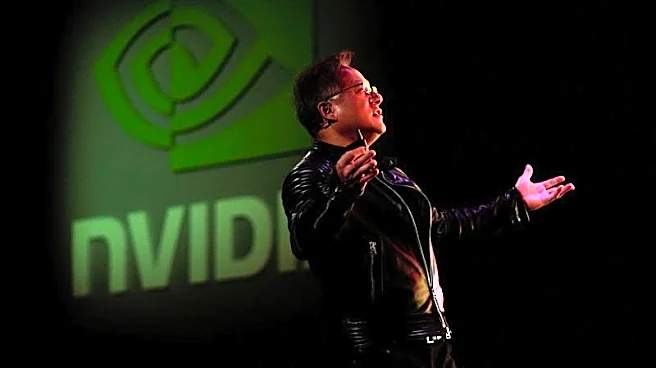
Jensen Huang, CEO of Nvidia, has amassed a fortune that places him among the wealthiest Americans in history, driven by Nvidia's success in specialized chip production and multibillion-dollar IPOs. This development prompts a comparison between contemporary
tech magnates and historical figures like Gilded Age industrialists. Historically, wealth was often measured relative to the U.S. GDP at the time, giving a different perspective on influence. For instance, John D. Rockefeller, founder of Standard Oil, held wealth equivalent to 1.5% of the country's GDP at his peak in 1937, which would translate to approximately $512.7 billion today when adjusted for inflation. Modern calculations, such as Forbes' estimates for living individuals as of November 25, 2026, are used to contextualize current fortunes against these historical benchmarks. The comparison highlights how the scale of wealth has evolved, with some modern figures like Elon Musk now eclipsing even Rockefeller's inflation-adjusted peak wealth.
Why It's Important?
The comparison of Jensen Huang's wealth to historical figures underscores significant shifts in the American economic landscape and the sources of extreme wealth. It highlights the unprecedented scale of fortunes being built in the technology sector today, contrasting with the industrial era. This shift has implications for economic power distribution, market concentration, and the role of innovation in wealth creation. The methodology of comparing wealth to GDP at the time of its peak provides a crucial lens for understanding economic influence across different eras. It suggests that while absolute dollar amounts have grown, the relative economic power of the wealthiest individuals might have varied. This analysis is vital for understanding long-term economic trends, the impact of technological advancements on wealth accumulation, and potential policy discussions around wealth distribution and market regulation in an era dominated by tech giants.
What's Next?
As the technology sector continues its rapid expansion, it is likely that the fortunes of tech leaders like Jensen Huang will continue to be a focal point for discussions on wealth and economic power. Future analyses will likely continue to track how these contemporary fortunes evolve relative to historical benchmarks, especially as new technologies emerge and reshape industries. The ongoing growth of AI and specialized computing, areas where Nvidia is a leader, suggests continued wealth accumulation for its key figures. This trend could further intensify debates about economic inequality, the concentration of wealth in specific sectors, and the potential need for new economic frameworks or regulatory approaches to address these dynamics. The performance of tech stocks and the broader economic environment will also play a significant role in how these fortunes fluctuate and are perceived in the coming years.
Beyond the Headlines
The comparison of Jensen Huang's wealth to historical figures like John D. Rockefeller extends beyond mere financial figures, touching upon deeper societal and economic implications. It prompts reflection on the nature of economic power and influence in different historical contexts. In the Gilded Age, wealth was often concentrated in foundational industries like oil and steel, shaping national infrastructure and labor relations. Today, tech wealth, while immense, is often derived from intellectual property, software, and digital services, which have different societal impacts, including rapid global scalability and the potential for network effects. This shift raises questions about the sources of economic value, the role of innovation versus resource control, and the ethical responsibilities associated with such vast fortunes. It also highlights the evolving definition of 'richest' and how economic dominance manifests in different eras, influencing public policy, philanthropy, and societal structures.