





What's Happening?
Burning Man is an annual week-long event held in Nevada’s Black Rock Desert, attracting tens of thousands of participants. This experimental community focuses on art, radical self-expression, and active participation. The festival is known for its unique
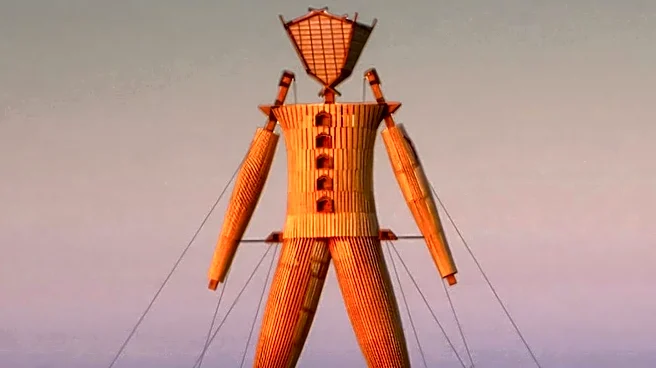
culture where monetary exchange is replaced by bartering, and creativity and performance are omnipresent. A central feature is the burning of a large wooden effigy known as 'the Man,' symbolizing the culmination of the event. Additionally, a Temple structure is erected where participants can leave messages and memorials before it is also ceremonially burned. The event is characterized by its temporary nature, as the entire city disappears without a trace once the festival concludes.
Why It's Important?
Burning Man represents a significant cultural phenomenon in the U.S., offering a unique model of temporary community and alternative economic interaction. Its emphasis on self-reliance, communal effort, and artistic expression provides a stark contrast to mainstream societal norms. The festival's 'leave no trace' philosophy also highlights environmental responsibility within a large-scale event context. While some critics, like Christian evangelist Bryce Crawford, view it as a place of spiritual oppression with widespread drug use and sexual activity, others, such as Doug Camplejohn, emphasize its role as a hub for creativity, entrepreneurship, and the generation of new ideas. This duality underscores its importance as a site for both cultural critique and innovation.
What's Next?
As an annual event, Burning Man will continue to draw participants to the Black Rock Desert, evolving with each iteration based on the collective contributions of its attendees. The ongoing debate between those who see it as a place of spiritual and moral decay and those who celebrate its creative and communal aspects is likely to persist. Future events will continue to explore themes of art, community, and self-expression, potentially influencing broader discussions on temporary urbanism, sustainable event management, and alternative social structures. The festival's impact on its participants and the surrounding region will remain a subject of interest, particularly concerning its economic and cultural footprint.
Beyond the Headlines
Beyond its immediate spectacle, Burning Man offers a profound exploration of human nature and societal constructs. It challenges conventional notions of value, ownership, and governance by fostering a gift economy and a community built on shared principles rather than commercial transactions. The event's temporary nature and the complete dismantling of its infrastructure each year raise questions about impermanence, memory, and the creation of ephemeral spaces. It also serves as a crucible for radical self-expression, pushing boundaries of art, performance, and personal identity, which can have lasting psychological and social impacts on its participants, encouraging them to integrate these experiences into their daily lives.