






What's Happening?
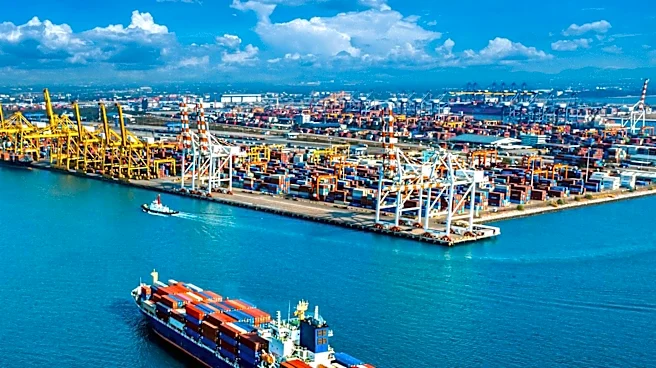
Nigeria has commenced construction on a new $3.5 billion deepwater port in Bakassi, Cross River State, aimed at easing severe trade congestion in Lagos. The project, which includes a 260-kilometer highway, is designed to accommodate larger cargo vessels
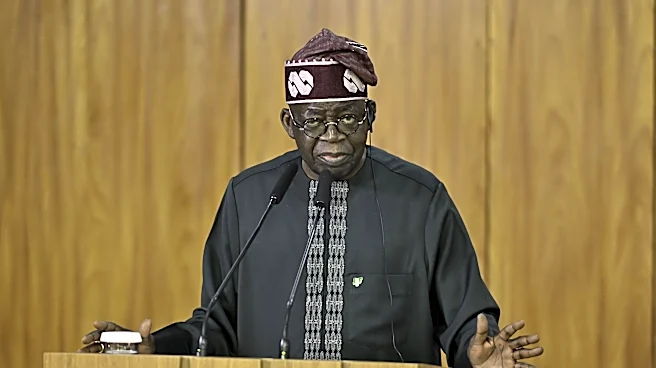
and provide an alternative to Lagos's ports, which currently handle over 80% of Nigeria's foreign trade. Vice President Kashim Shettima attended the groundbreaking ceremony on November 13. President Bola Tinubu described the Bakassi port as a "strategic investment" intended to diversify the economy and enhance Nigeria's position in international maritime trade. The port will have a water depth of 20 meters, allowing access for large commercial vessels that currently bypass many Nigerian ports due to infrastructure limitations. This will be Nigeria's second deepwater port, following the Lekki port in Lagos, which opened in January 2023.
Why It's Important?
This development is crucial for Nigeria's economy, as port inefficiencies currently cost the country an estimated $8 billion annually, with $5.8 billion representing lost revenue for businesses. Cargo clearance in Lagos ports takes an average of 18 to 21 days, significantly longer than in neighboring Ghana (5-7 days) and Cotonou (4 days), leading to logistics and customs clearance charges that are approximately 30% higher. The Bakassi port aims to reduce these costs and delays, making Nigerian trade more competitive. By providing an alternative maritime gateway, it will alleviate the heavy reliance on Lagos, which has led to some of the highest logistics costs in West Africa. The project also offers a potential new route to international markets for landlocked countries like Chad, Niger, Mali, and Burkina Faso, strengthening regional trade ties.
What's Next?
The Bakassi deepwater port project is expected to follow a public-private partnership model, with initial financing approval of $2.27 billion already secured. The African Export-Import Bank (Afreximbank) is serving as the mandated lead arranger and financial adviser. A dedicated project company, Bakassi Deep Seaport Limited, has been established to oversee its development. Under a shareholders' agreement ratified in February 2025, Dubai-based Arise Integrated Industrial Platforms (Arise IIP) is set to acquire an 80% stake, with the Cross River State government retaining 20%. Construction will proceed with these financial and operational frameworks in place, aiming to bring the port into operation to address Nigeria's trade infrastructure weaknesses and improve its standing in global logistics rankings.
Beyond the Headlines
The Bakassi deepwater port project signifies a strategic shift in Nigeria's approach to national infrastructure and economic diversification. By decentralizing maritime trade away from Lagos, the government aims to foster more balanced regional development and unlock economic potential in other parts of the country. This initiative could lead to the growth of new industrial hubs and logistics corridors, creating jobs and stimulating local economies beyond the traditional commercial centers. Furthermore, the project's potential to serve landlocked West African nations underscores Nigeria's ambition to become a regional trade and logistics powerhouse, enhancing its geopolitical influence. The success of this venture will also serve as a critical test case for large-scale public-private partnerships in Nigeria, potentially paving the way for similar infrastructure projects in the future.