


What's Happening?
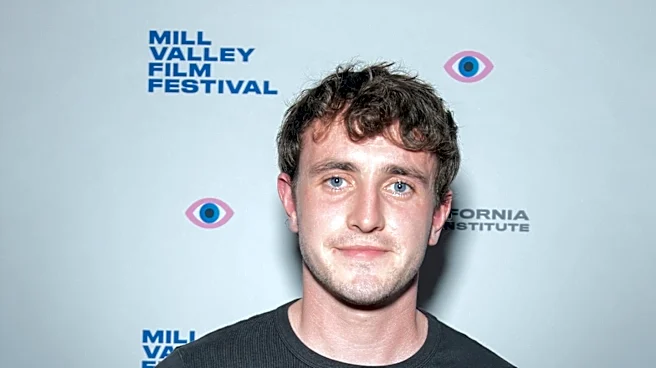
Paul Mescal has been cast as Franklin Shepard in Richard Linklater's upcoming film adaptation of 'Merrily We Roll Along.' The movie, based on the 1981 Broadway musical by Stephen Sondheim and George Furth, which itself was adapted from a 1934 stage play,
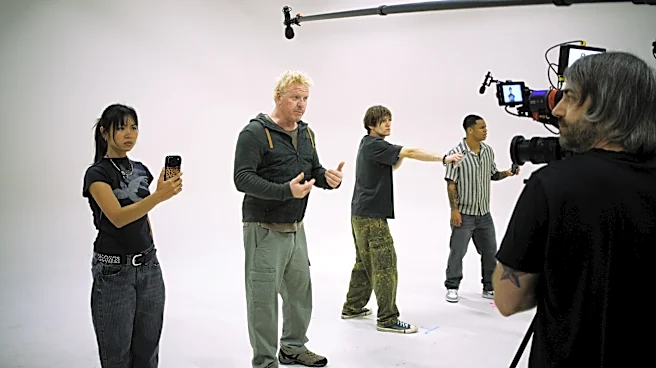
is notable for its ambitious production timeline. Linklater plans to shoot the film over 20 years, with a projected release in 2040. The story unfolds in reverse-chronological order, following Shepard, a Broadway composer who abandons his artistic pursuits and friends to become a wealthy, cynical Hollywood movie producer. Mescal will star alongside Beanie Feldstein as Mary Flynn and Ben Platt as Charley Kringas. Other cast members include Mallory Bechtel, Hannah Cruz, Boo Arnold, Leah Loftin, Werner Richmond, Lin-Manuel Miranda, Jon Renée, and Tristan Tierney. Reshoots occurred in 2021 following Mescal's casting, though the extent of footage from 2019 that will be used remains unclear. Linklater previously undertook a similar long-term project with his acclaimed film 'Boyhood,' which took 12 years to complete.
Why It's Important?
The production of 'Merrily We Roll Along' represents a significant and unconventional approach to filmmaking, potentially redefining how long-form narratives are brought to the screen. Richard Linklater's commitment to filming over two decades, mirroring the reverse-chronological progression of the story, offers a unique opportunity to capture the natural aging and evolution of his actors, adding a layer of authenticity rarely seen in cinema. This method could influence future film productions, particularly those aiming for deep character development and realistic portrayals of time's passage. For Paul Mescal, starring in such a project solidifies his position as a prominent actor willing to engage in artistically challenging and long-term commitments. The film's success could set a precedent for how audiences and critics perceive and engage with movies produced over extended periods, potentially shifting industry standards for production timelines and actor contracts. The involvement of a celebrated musical like Stephen Sondheim's 'Merrily We Roll Along' also brings a beloved theatrical work to a new cinematic format, potentially introducing it to a wider audience through this innovative adaptation.
What's Next?
The production of 'Merrily We Roll Along' is ongoing, with the fourth section of filming scheduled to commence in the coming months. Director Richard Linklater has indicated that the film will be shot in nine sections over 20 years, culminating in its release in 2040. This extended timeline means that updates on the film's progress will likely be sporadic, focusing on the completion of each section of filming. Audiences and industry observers will be keenly watching how the cast members, including Paul Mescal, Beanie Feldstein, and Ben Platt, evolve in their roles over the years. The unique production schedule also raises questions about potential challenges, such as maintaining cast availability, managing creative consistency over two decades, and adapting to unforeseen circumstances. Linklater has acknowledged these challenges, drawing parallels to his previous experience with 'Boyhood' but noting the added public scrutiny due to the source material being a well-known Stephen Sondheim musical. The film's eventual release in 2040 will be a major cinematic event, offering a rare look at a story told with an unprecedented commitment to real-time character development.
Beyond the Headlines
The ambitious 20-year production schedule for 'Merrily We Roll Along' delves into profound themes beyond its narrative, particularly concerning the nature of artistic creation and the passage of time. This method challenges the conventional rapid production cycles of Hollywood, emphasizing a more organic, life-like development of characters and relationships. Ethically, it raises questions about the long-term commitment required from actors and crew, and the potential impact on their careers and personal lives over two decades. From a legal standpoint, the contracts for such a project must be exceptionally complex, accounting for unforeseen events, career changes, and the natural aging process of the cast. Culturally, the film could become a significant touchstone, offering a unique cinematic experiment that blurs the lines between documentary and fiction, as the actors themselves age alongside their characters. This approach could foster a deeper appreciation for the craft of acting and directing, highlighting the dedication required to bring such a vision to fruition. The project also implicitly comments on the fleeting nature of youth and the enduring power of friendship, themes central to the original musical, amplified by the real-time aging of the performers.