




What's Happening?
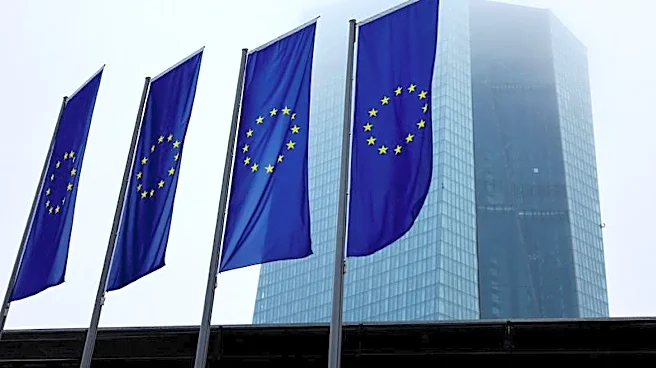
Christine Lagarde, President of the European Central Bank (ECB), has called for European nations to act more decisively in addressing global crises and maintaining the European Union's competitiveness. Speaking at the European Banking Congress in Frankfurt,
Germany, Ms. Lagarde highlighted that Europe often recognizes challenges early but is slow to implement measures, frequently acting only when it's too late. She cited the example of the Capital Markets Union, an initiative aimed at strengthening European financial markets to compete with larger U.S. financial markets. Despite over a decade of consensus on its necessity, progress has been insufficient. Lagarde also pointed to the significant challenge of technological dependence, estimating that Europe needs to invest approximately 1.3 trillion euros (1.428 trillion USD) to increase its share of global artificial intelligence (AI) computing capacity from about 5% to 15% by 2030. She warned that the cost of inaction in these areas would be far greater than the investment required.
Why It's Important?
Lagarde's remarks underscore a critical issue for Europe's economic future and its global standing, which indirectly impacts the U.S. through trade and geopolitical stability. The slow pace of reform, particularly in financial markets, means European savings are increasingly invested abroad, and high-growth businesses seek capital in other markets, including the U.S. This outflow of capital and talent could diminish Europe's economic strength, potentially affecting transatlantic economic partnerships. Furthermore, Europe's technological dependence, especially in AI, could create vulnerabilities. If Europe lags in developing its own AI capabilities, it might become overly reliant on foreign providers, many of whom are U.S.-based. This could lead to a concentration of technological power, impacting global innovation and potentially creating economic imbalances. The call for decisive action reflects a broader concern about Europe's ability to compete with economic powerhouses like the U.S. and China, making its economic resilience a key factor in global stability.
What's Next?
Lagarde's statements suggest a continued push from the ECB for European policymakers to prioritize and accelerate structural reforms. The immediate next steps would involve renewed discussions and potential legislative efforts within the EU to advance initiatives like the Capital Markets Union. However, as Lagarde noted, overcoming inertia and achieving broad consensus for significant changes remains a challenge. The estimated 1.3 trillion euro investment needed for AI development indicates that substantial public and private sector funding will be required, potentially leading to debates over budget allocations and investment strategies. The effectiveness of these calls will depend on the political will of individual member states and the EU institutions to translate recognition of challenges into concrete, timely actions. Failure to act could see Europe's economic and technological competitiveness further erode, with long-term implications for its global influence.
Beyond the Headlines
The deeper implication of Lagarde's message is a critique of Europe's decision-making process, characterized by a tendency to act only when a crisis becomes undeniable. This reactive approach, as she illustrated with the COVID-19 pandemic and the conflict in Ukraine, often leads to significant, urgent interventions but may prevent proactive, strategic development. The reluctance to undertake reforms until the 'cost of inaction' is universally apparent highlights a systemic challenge in European governance. This pattern suggests that while Europe can mobilize effectively in acute crises, it struggles with sustained, preventative policy implementation. This could lead to a cycle where Europe consistently plays catch-up in critical areas like financial market integration and technological advancement, rather than leading. The ethical dimension lies in the potential for missed opportunities and the long-term erosion of economic sovereignty if Europe continues to defer crucial strategic investments and reforms.