

What's Happening?
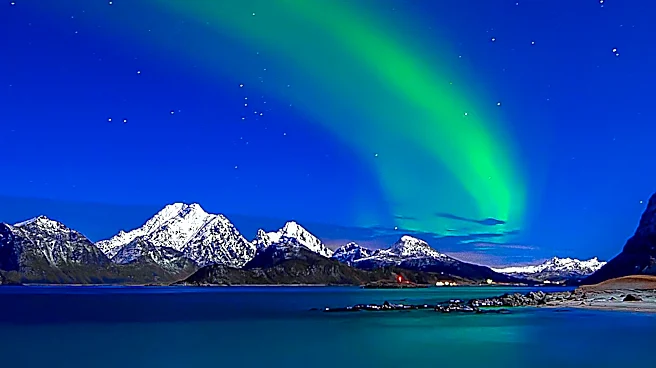
Tromsø, Norway, is being highlighted as a prime location for experiencing the Northern Lights. The city's northerly position and dark skies contribute to optimal viewing conditions. Various tours, such as the 24-Hour Northern Lights and Whale Watching
Cruise, offer opportunities for an overnight adventure to witness the aurora borealis in the Arctic fjords. The optimal period for Northern Lights viewing in Tromsø spans from September to April, with February and March specifically noted by Ambassador Cruise Line for offering the best conditions for both aurora sightings and winter activities. Unlike sightings further south, which often appear as faint fringes, Tromsø's location directly beneath the aurora ring allows for full, vibrant displays that are clearly visible to the naked eye. The region also offers a rich cultural and natural experience beyond the lights, including snow-dusted landscapes, wildlife viewing, and Sami culture.
Why It's Important?
The increasing recognition of Tromsø as a top Northern Lights destination has significant implications for the tourism industry, particularly for cruise lines and local businesses in Arctic Norway. This focus on experiential travel, combining natural phenomena with cultural immersion and winter sports, can drive economic growth in the region. For travelers, it offers a more authentic and spectacular viewing experience compared to more southerly locations, potentially shifting tourism patterns. The emphasis on dark skies and remote locations also underscores a growing appreciation for natural environments free from light pollution. This trend could influence infrastructure development and conservation efforts in other potential aurora viewing regions, aiming to preserve the pristine conditions necessary for such natural spectacles. The extended viewing season from September to April also provides a longer window for tourism revenue generation.
What's Next?
As Tromsø's reputation as a Northern Lights hub grows, it is likely to see continued development in its tourism infrastructure, including more specialized tours and accommodations catering to aurora chasers. Cruise lines and tour operators will likely expand their offerings to meet increasing demand, potentially introducing new itineraries and unique experiences. There may also be a focus on promoting sustainable tourism practices to manage the environmental impact of increased visitor numbers. Local authorities and businesses could further invest in marketing campaigns to attract international visitors, emphasizing the unique combination of natural beauty, cultural heritage, and winter activities available in the region. The ongoing research into the psychological effects of polar night, as conducted by individuals like Kari Leibowitz, could also influence how destinations like Tromsø market their winter experiences, focusing on the 'cosy' and 'restorative' aspects of the dark season.
Beyond the Headlines
The phenomenon of people in Arctic regions, like Tromsø, embracing the polar night with a positive mindset challenges conventional understandings of seasonal affective disorder. Research by individuals such as Kari Leibowitz suggests that cultural attitudes and a proactive approach to winter activities can significantly influence mental well-being during periods of prolonged darkness. This highlights the profound impact of mindset and cultural practices on human psychology, suggesting that environmental challenges can be reframed as opportunities for unique experiences and community bonding. The concept of 'koselig' (Norwegian for cozy) exemplifies how cultural values can transform a potentially harsh environment into a source of comfort and enjoyment. This deeper understanding could inform public health strategies and urban planning in other cold, dark regions, encouraging communities to foster positive wintertime mindsets and create engaging seasonal activities.