







What's Happening?
Nth Cycle, a Massachusetts-based metals refiner, has signed a binding term sheet with Glencore for an estimated ten-year off-take agreement valued at over $1 billion. This deal centers on Project SHIELD, Nth Cycle's planned battery materials refining
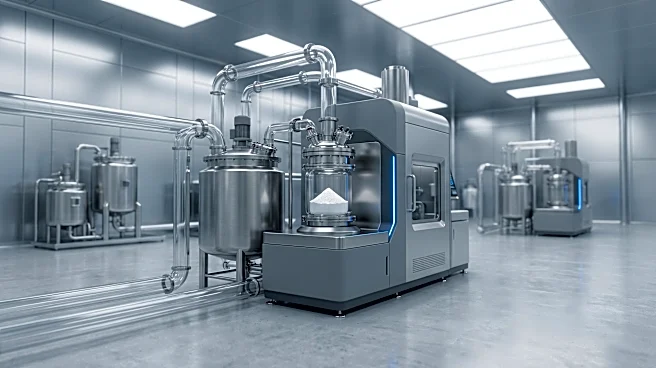
facility in South Carolina. Under the agreement, Glencore will supply all black mass for the facility through its commercial network and existing U.S. shredding assets. In return, Glencore will off-take Nth Cycle's high-purity mixed hydroxide product and battery-grade lithium carbonate. The collaboration also includes exploring the deployment of Nth Cycle's Oyster system for black mass refining in Europe and for rare earth and copper recovery globally. Nth Cycle states that it now has binding term sheets covering 100% of its projected feedstock and off-take needs for Project SHIELD, aligning with recent U.S. black mass export controls and a $100 million grant from the Department of Energy.
Why It's Important?
This significant off-take deal is crucial for bolstering the domestic supply chain of critical battery materials in the United States. By securing both feedstock supply from Glencore and guaranteed off-take for its refined products, Nth Cycle's Project SHIELD is positioned to become a key player in the U.S. battery manufacturing ecosystem. This partnership directly supports U.S. efforts to reduce reliance on foreign sources for critical minerals, which are essential for electric vehicles, renewable energy storage, and other advanced technologies. The deal's alignment with U.S. black mass export controls and Department of Energy funding underscores a broader national strategy to localize and secure critical mineral processing. For the automotive and energy sectors, this means a more stable and potentially more sustainable source of materials, reducing supply chain risks and promoting economic independence.
What's Next?
Nth Cycle and Glencore are targeting the execution of definitive agreements related to the black mass supply and the off-take of mixed hydroxide product and battery-grade lithium carbonate by the end of 2026. Following this, Nth Cycle will proceed with the development and construction of its Project SHIELD facility in South Carolina, leveraging its strategic port access and location within a rapidly growing energy corridor. The companies will also jointly explore opportunities to deploy Nth Cycle's Oyster system in Europe for black mass refining and globally for rare earth and copper recovery. The successful implementation of Project SHIELD will be closely watched as a model for domestic critical mineral processing and its impact on the U.S. clean energy transition.
Beyond the Headlines
This partnership represents a significant step towards establishing a circular economy for battery materials within the U.S. By refining black mass from recycled batteries, Nth Cycle's technology contributes to sustainability goals by reducing the need for virgin mining and minimizing environmental impact. The collaboration with a global commodities giant like Glencore also highlights the increasing integration of traditional mining and trading companies into the burgeoning battery recycling and refining sector. This trend could lead to more robust and resilient supply chains, but also raises questions about the market power of large corporations in controlling critical resources. Furthermore, the development of advanced refining technologies like Nth Cycle's Oyster system could set new industry standards for efficiency and environmental performance in critical mineral recovery, potentially influencing global practices and regulations.