
What's Happening?
The Artificial Intelligence (AI) industry is approaching a critical inflection point where it is projected to become cash-flow negative, leading to a slowdown in capital expenditure (capex) spending by
hyperscalers in 2027. According to Stijn Van Nieuwerburgh of Columbia Business School, capex for the five largest hyperscalers (Oracle, Microsoft, Amazon, Meta, and Alphabet) is estimated to surpass their combined operating cash flow for the first time in 2026. While internal cash generation remains substantial, it will no longer be sufficient to finance the projected pace of investment without increased reliance on external capital or alternative financing structures. Analysts from Wells Fargo, Pantheon Macroeconomics, and others anticipate a meaningful deceleration in AI capex by 2027, with a more significant slowdown expected in 2028.
Why It's Important?
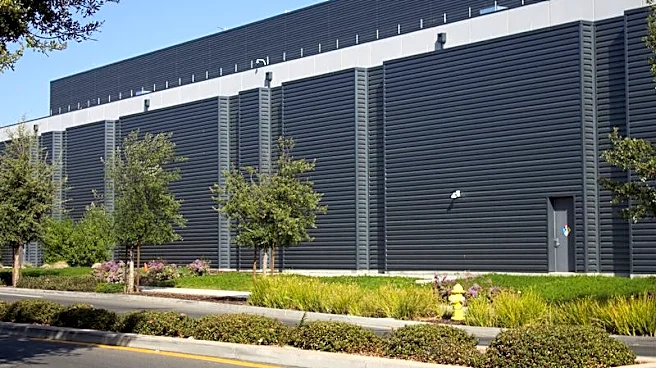
This projected slowdown in AI spending has significant implications for the U.S. technology sector and broader economy. A reduction in capex by major tech companies could impact hardware manufacturers, data center developers, and the overall growth trajectory of the AI industry. It signals a potential shift from rapid expansion to a more measured, financially sustainable growth model. Companies heavily invested in AI infrastructure or dependent on hyperscaler spending may face challenges. The tightening financing constraints and rising borrowing costs, coupled with supply-side issues like chip shortages and power grid capacity limitations, could temper the aggressive investment pace that has characterized the AI boom. This could lead to a re-evaluation of investment strategies and a focus on more efficient resource allocation within the industry.
What's Next?
As the AI industry approaches this inflection point, companies will likely explore strategies to optimize their investments and manage cash flow more effectively. This could involve prioritizing projects with clearer returns on investment, seeking more innovative financing solutions, or consolidating resources. The market will be closely watching third-quarter earnings reports and midterm election outcomes for further indicators. Analysts expect continued strong growth in AI-linked investment, but the pace of hyperscaler capex growth is set to moderate. The industry will need to address supply-side constraints and higher borrowing costs to sustain its development, potentially leading to a more mature and financially disciplined phase of growth.
Beyond the Headlines
The impending cash-flow negative inflection point for the AI industry highlights the inherent challenges of rapid technological expansion. While AI promises transformative benefits, the immense capital required for its infrastructure development raises questions about long-term financial sustainability and market bubbles. This situation could trigger a re-evaluation of the true value and profitability of various AI applications, potentially leading to a shakeout where less viable projects or companies struggle to secure funding. It also underscores the critical role of external capital and innovative financing in sustaining high-growth tech sectors, and the potential for economic factors like interest rates to significantly influence technological advancement.