






What's Happening?
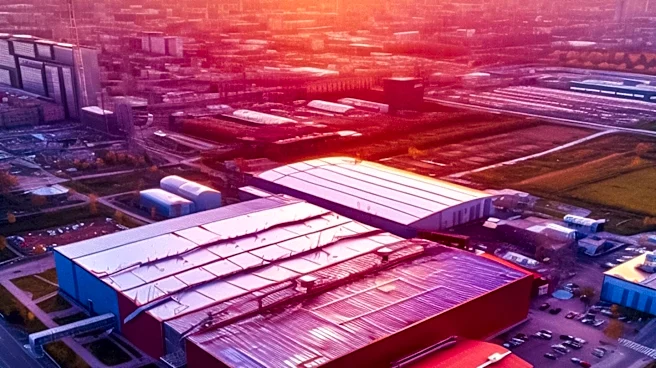
Japanese chemical producer Tokuyama has officially opened a new polysilicon factory in Ho Chi Minh City, Vietnam. This facility, located within the Phu My 3 Special Industrial Park, is dedicated to the manufacturing and distribution of polysilicon specifically
for semiconductors. Local reports indicate the factory will have an annual production capacity of 4,995 metric tons (MT). This development follows Tokuyama's earlier announcement in 2024 regarding the factory's plans. The company has invested approximately VND 580 billion ($22.2 million) into this project. This Vietnamese factory is noted as the first of its kind in the country for the production and distribution of polycrystalline silicon for semiconductors. Tokuyama emphasizes that the facility will prioritize trial operations and quality checks with a strong focus on safety.
Why It's Important?
This new polysilicon factory in Vietnam is a strategic move by Tokuyama to strengthen the global semiconductor supply chain, which has faced significant disruptions in recent years. Polysilicon is a critical raw material for silicon wafers used in advanced semiconductors, making its stable supply essential for the technology industry. By diversifying its production bases, Tokuyama aims to ensure a more resilient supply of these vital components. The expansion of polysilicon manufacturing capacity, particularly in Southeast Asia, can help mitigate risks associated with geographical concentration of production and potential geopolitical tensions. This move could contribute to greater stability and predictability in the semiconductor market, benefiting U.S. technology companies and consumers who rely on a steady supply of electronic devices. The increased production capacity also supports the anticipated growth of the semiconductor market, addressing future demand for advanced chips.
What's Next?
Following the inauguration, the Tokuyama factory in Vietnam will proceed with trial operations and rigorous quality checks, with safety as a paramount concern. This phase is crucial to ensure the facility meets the high standards required for semiconductor-grade polysilicon. Concurrently, Tokuyama is also developing a larger 10,000 MT polysilicon factory in Malaysia in partnership with South Korea-based OCI. This Malaysian facility, once operational, will significantly increase Tokuyama's total production capacity by 50 percent to 12,500 tonnes per year. The combined output from these new facilities is expected to further enhance the global supply of polysilicon, potentially leading to more stable pricing and availability for semiconductor manufacturers worldwide. The company's focus will be on integrating these new production capabilities into its existing supply chain to maximize efficiency and meet growing market demands.
Beyond the Headlines
The establishment of this polysilicon factory in Vietnam highlights a broader trend of semiconductor supply chain diversification and regionalization. As global demand for semiconductors continues to surge, driven by advancements in artificial intelligence, 5G technology, and the Internet of Things, companies are increasingly investing in new production hubs outside traditional manufacturing centers. This strategy aims to reduce reliance on single points of failure and enhance supply chain resilience against future disruptions, whether from natural disasters, trade disputes, or geopolitical events. The investment in Vietnam also signifies the country's growing role in the global technology manufacturing landscape, attracting high-tech industries and fostering economic development. This shift could lead to a more distributed and robust global semiconductor ecosystem, ultimately benefiting the stability and innovation within the U.S. technology sector.