

What's Happening?
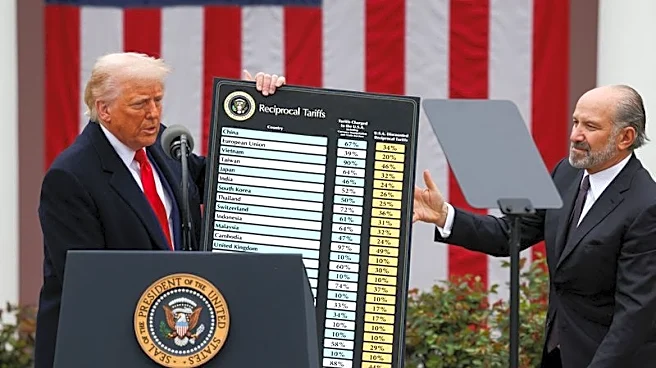
Following a Supreme Court decision that invalidated most of President Trump's tariffs, the U.S. government has begun issuing tariff refunds to major companies like Apple and Amazon. These refunds, amounting to billions of dollars, are a result of tariffs deemed
unconstitutional under the International Emergency Economic Powers Act of 1977. Despite the refunds, companies have not committed to passing these savings on to consumers, who initially bore the cost of the tariffs through higher prices.
Why It's Important?
The issuance of tariff refunds highlights the complexities of trade policy and its impact on the economy. While large corporations benefit from these refunds, the lack of direct consumer relief underscores the challenges in ensuring that economic policies benefit the broader public. The situation also reflects ongoing tensions in U.S. trade policy, particularly the use of tariffs as a tool for economic leverage, which can have unintended consequences for domestic consumers and businesses.
What's Next?
As companies decide how to utilize the refunded money, there may be calls for greater transparency and accountability in how these funds are used. Policymakers and consumer advocacy groups might push for measures to ensure that future trade policies do not disproportionately impact consumers. Additionally, the ongoing debate over the role of tariffs in U.S. trade policy is likely to continue, with potential implications for future economic strategies and international relations.