







What's Happening?
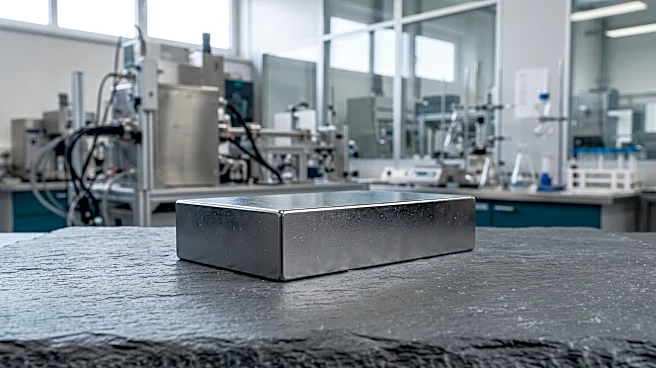
The U.S. South is emerging as a critical region for developing a domestic rare earth supply chain, aiming to reduce reliance on China. This initiative leverages the region's existing chemical plants, port infrastructure, and mineral deposits. Several
companies are actively involved: Aclara Resources received a non-binding letter of interest for up to $750 million from the U.S. Export-Import Bank to finance its proposed Dynamo separation plant in Louisiana, which will process materials from projects in Chile and Brazil. Rare Earths Americas is conducting a 25,000- to 30,000-meter drill program at its Foothills project in Georgia, with plans to release an initial resource in the first quarter of 2027. Other companies like USA Rare Earth are conducting feasibility studies in Texas, and IperionX completed a feasibility study for its Titan project in Tennessee. Chemours is also extracting mineral sands containing rare earths in Florida and Georgia. This concerted effort signifies a strategic pivot towards establishing a robust, independent rare earth processing and mining capability within the United States.
Why It's Important?
The development of a domestic rare earth supply chain in the U.S. South is crucial for national security and economic independence. Rare earth elements are vital components in numerous high-tech industries, including defense, renewable energy, and electronics. Currently, China dominates the global supply chain for these critical minerals, posing a significant geopolitical and economic vulnerability for the United States. By establishing its own mining and processing facilities, the U.S. can secure a stable supply of these essential materials, mitigating risks associated with international trade disruptions or geopolitical tensions. This initiative also promises to create new jobs, stimulate regional economic growth, and foster technological innovation within the U.S. The investment in infrastructure and processing capabilities will strengthen the country's industrial base and enhance its competitive edge in strategic sectors, reducing dependence on foreign sources for critical resources.
What's Next?
The immediate next steps involve securing financing and advancing project development for the various initiatives in the U.S. South. Aclara Resources aims to begin site preparation for its Dynamo plant in Louisiana in the first quarter of 2027, contingent on financing, with construction targeted for completion in the second half of 2028. Rare Earths Americas plans to release an initial resource for its Foothills project in Georgia in the first quarter of 2027, following its extensive drill program. Further exploration and feasibility studies are expected from other companies like USA Rare Earth and IperionX. The success of these projects will depend on overcoming challenges such as securing consistent feedstock, scaling up operations reliably, and navigating environmental and regulatory approvals. Continued government support, including funding and policy incentives, will be critical in accelerating the establishment of a fully functional domestic rare earth supply chain.
Beyond the Headlines
The push to build a rare earth supply chain in the U.S. South extends beyond immediate economic and security benefits, touching upon broader implications for global resource dynamics and environmental stewardship. This domestic effort could reshape international trade relationships, potentially leading to a more diversified global supply of rare earths and reducing China's leverage. Environmentally, the development of new mining and processing techniques within the U.S. could set higher standards for sustainable extraction and refining, contrasting with practices in some other parts of the world. Ethically, it raises questions about responsible resource management and community engagement in regions where these operations are established. The long-term success of this initiative could also spur further innovation in material science, leading to the development of alternative materials or more efficient recycling processes for rare earth elements, thereby contributing to a more circular economy and reducing the overall environmental footprint of these critical minerals.