



What's Happening?
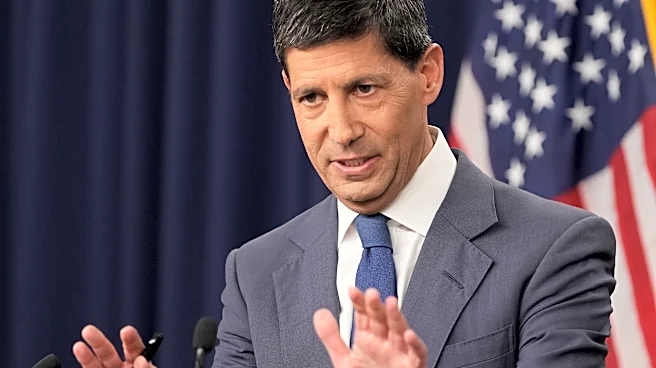
Federal Reserve Chair Kevin Warsh's decision to hold interest rates at 3.5% has drawn sharp criticism from Wall Street. Despite inflation being at 4.1%, above the Fed's 2% target, Warsh opted not to raise rates, leading to a 1.52% drop in the S&P 500.
Analysts argue that the decision undermines the Fed's credibility, with many expecting a rate hike in September. The bond market reacted negatively, with the 30-year Treasury yield reaching a 19-year high. Warsh's comments acknowledging the Fed's past inflation missteps have not alleviated concerns, as investors question the Fed's commitment to controlling inflation.
Why It's Important?
The Fed's interest rate decisions are crucial for economic stability, influencing borrowing costs, consumer spending, and investment. Warsh's decision to hold rates could signal a cautious approach to monetary policy, but it risks eroding confidence in the Fed's ability to manage inflation. The market's reaction reflects broader concerns about economic growth and the potential for a recession. The decision also impacts global markets, as U.S. monetary policy influences international financial conditions. The Fed's credibility is at stake, with potential implications for future policy decisions and economic recovery efforts.
What's Next?
The Fed's next steps will be closely watched, with a potential rate hike in September anticipated by many analysts. Warsh's ability to communicate the Fed's strategy effectively will be critical in restoring market confidence. The Fed may need to provide clearer guidance on its inflation targets and policy intentions to address investor concerns. The ongoing geopolitical tensions and their impact on oil prices add complexity to the Fed's decision-making process. The outcome of the Fed's actions will have significant implications for the U.S. economy and global financial markets.