




What's Happening?
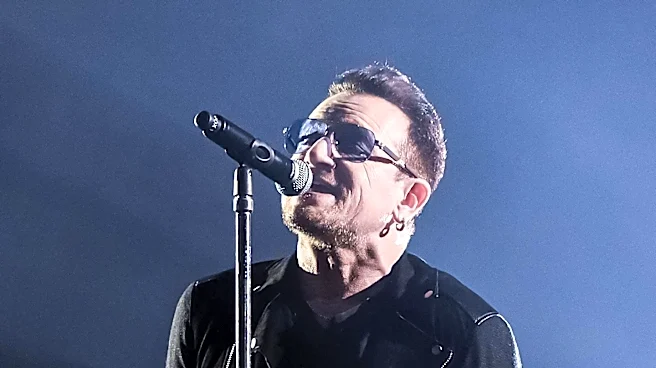
U2's song 'Sunday Bloody Sunday' is a protest anthem that has been both celebrated and misunderstood since its release. The song, which appears on the band's 1983 album 'War', addresses the political and sectarian violence in Northern Ireland, known as 'The
Troubles'. Despite common misconceptions, the band has clarified that the song is not a rebel song but rather a call for peace and an end to violence. The lyrics were inspired by the events of Bloody Sunday in 1972, where British soldiers killed 13 unarmed civilians during a protest in Derry. U2's frontman Bono has emphasized the song's message of hope and disgust at the ongoing conflict.
Why It's Important?
The song 'Sunday Bloody Sunday' holds significant cultural and historical importance as it captures the emotional and political climate of Northern Ireland during a turbulent period. It serves as a reminder of the impact of music as a form of protest and social commentary. The song's enduring popularity highlights the power of art to influence public opinion and promote peace. U2's approach to addressing complex political issues through music has inspired other artists to use their platforms for advocacy and change.
Beyond the Headlines
Beyond its immediate impact, 'Sunday Bloody Sunday' has contributed to the broader discourse on the role of artists in political movements. The song's message transcends its specific historical context, resonating with global audiences facing similar conflicts. U2's decision to avoid taking sides in the conflict and instead focus on the human cost of violence reflects a nuanced understanding of the issues at hand. This approach has allowed the song to maintain its relevance and continue to inspire calls for peace and reconciliation worldwide.