










What's Happening?
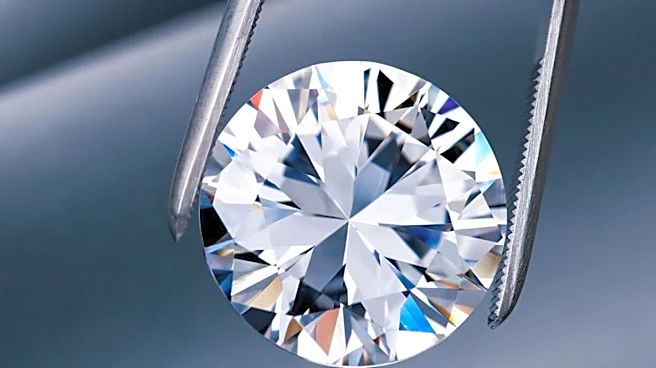
The diamond market is experiencing significant disruption due to the rise of lab-grown diamonds, which are nearly indistinguishable from natural stones but are sold at a much lower price. This trend began during the pandemic and has continued to impact
the natural diamond market, leading to a bifurcation where only large or unique natural diamonds maintain their value. According to industry analysts, the Diamond Standard Index, which tracks the price of investment-grade diamonds, has dropped to its lowest level ever, with prices down 68% from their peak in 2011. While large natural diamonds have shown resilience, smaller and lower-quality stones have seen a decline in sales. The popularity of lab-grown diamonds is particularly strong among middle-class consumers purchasing engagement and wedding rings, with lab-grown stones making up 61% of engagement ring purchases last year.
Why It's Important?
The shift towards lab-grown diamonds has significant implications for the natural diamond industry, which is facing a potential long-term decline. The affordability and ethical appeal of lab-grown diamonds are attracting consumers, particularly in the engagement ring market, traditionally a stronghold for natural diamonds. This trend could lead to a fundamental change in consumer perceptions of diamond value, impacting the profitability of natural diamond producers. Additionally, the decline in marriage rates and economic pressures are further challenging the natural diamond market. The industry's ability to adapt to these changes will determine its future viability, with potential losses for stakeholders reliant on traditional diamond sales.
What's Next?
The future of the diamond market remains uncertain, with some analysts predicting a possible recovery for natural diamonds as consumers may eventually seek the 'real thing' again. However, the timeline for such a recovery is unclear, and the market may continue to face challenges from the growing acceptance and popularity of lab-grown diamonds. Industry stakeholders may need to innovate and adapt their strategies to remain competitive, potentially focusing on marketing the unique qualities of natural diamonds or exploring new markets.
Beyond the Headlines
The rise of lab-grown diamonds also raises ethical and environmental considerations, as they are often marketed as a more sustainable and conflict-free alternative to natural diamonds. This aspect may continue to influence consumer preferences, particularly among environmentally conscious buyers. The diamond industry may need to address these concerns and highlight the benefits of natural diamonds to maintain their market share. Additionally, the cultural significance of diamonds, particularly in engagement and wedding traditions, may evolve as consumer attitudes shift.