

What's Happening?
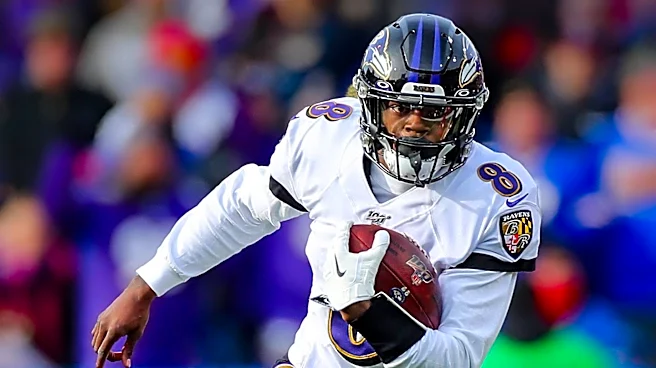
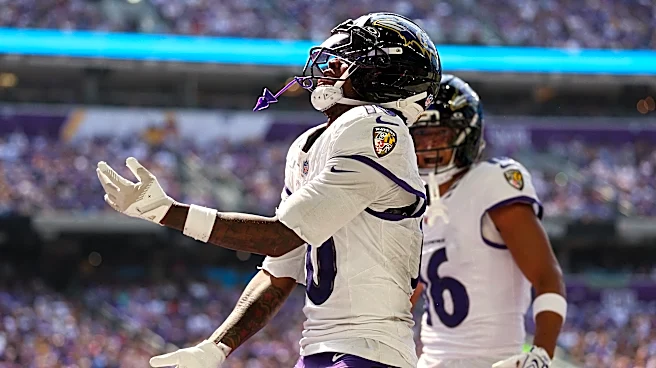
Lamar Jackson, quarterback for the Baltimore Ravens, remains under contract but has not signed a long-term extension. He is currently owed $52 million in cash for each of the next two seasons, with an $84.3 million cap hit projected for 2027. Jackson, who
acts as his own agent, possesses significant leverage due to a no-franchise-tag provision and a no-trade clause in his current deal. This gives him full control over his future team if he chooses to explore options outside Baltimore. The league sentiment suggests Jackson is prepared to utilize this leverage, potentially playing out the 2026 season without an extension. This situation is unfolding against a backdrop of rapidly escalating player contracts across the NFL, with several market-topping deals for quarterbacks and other positions being signed in recent months.
Why It's Important?
Jackson's contract situation highlights a significant trend in the NFL: the dramatic increase in player salaries, particularly for star quarterbacks. This trend is driven by a 44.7% increase in the NFL's salary cap over the past four years, reaching $301.2 million. For the Ravens, securing Jackson long-term is crucial for team stability and future competitiveness. His unique contractual clauses mean the team has limited options if he decides to seek a new home. For Jackson, waiting could allow him to capitalize on an exploding quarterback market, potentially becoming the first NFL player to earn $70 million per year, especially as star quarterbacks from the 2024 draft class become eligible for extensions. This scenario could set new benchmarks for player compensation, impacting future negotiations across the league and potentially making it more challenging for teams to build competitive rosters around highly paid stars.
What's Next?
The immediate future for Lamar Jackson involves continued negotiations with the Baltimore Ravens, though the likelihood of an extension before the 2026 season concludes appears to be diminishing. Jackson could choose to play out his current contract, allowing the market to further develop before making a long-term commitment. If he waits until the next offseason, he would be in a strong position to command a record-setting deal, influenced by the extensions of other top quarterbacks. The Ravens will likely continue to present offers, but Jackson's control over his future means he can afford to be patient. The outcome of these negotiations will not only determine Jackson's future with the Ravens but also potentially influence the salary expectations of other elite players in the NFL.
Beyond the Headlines
The ongoing contract saga with Lamar Jackson underscores a broader power shift in professional sports, where elite athletes, especially those who self-represent, are increasingly leveraging market dynamics and contractual clauses to their advantage. Jackson's approach challenges traditional team-centric negotiation models, emphasizing individual player autonomy and financial maximization. This trend could lead to more players opting for shorter-term deals or including similar protective clauses to maintain flexibility. Furthermore, the escalating player salaries, while beneficial for athletes, could intensify debates about salary cap management and the long-term financial sustainability of team rosters, potentially forcing teams to make difficult choices between retaining star talent and building depth. The ethical implications of teams potentially losing star players due to financial constraints, despite their on-field contributions, also come into focus.