





What's Happening?
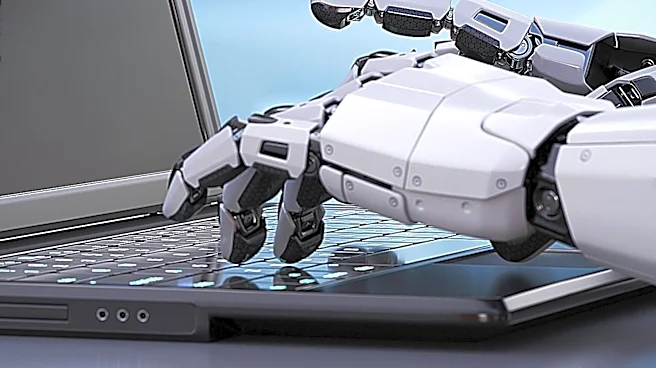
Amjad Masad, CEO of Replit, asserts that artificial intelligence (AI) should automate mundane tasks, thereby enabling humans to engage in more creative and strategic work. Masad's company, Replit, allows users to build software by describing their needs
in plain English, a process known as 'vibe coding.' He notes a significant shift within Replit's own operations, where the use of AI agents has transformed the work environment from engineers typing on keyboards to a more collaborative setting focused on strategic thinking and human interaction. Masad emphasizes that the current focus on AI extinction is a distraction from more immediate concerns, particularly cybersecurity threats posed by AI. He believes that companies running on insecure platforms are exposing their businesses and users to substantial risks.
Why It's Important?
Masad's perspective is crucial for the U.S. business landscape as it challenges the prevalent fear of job displacement due to AI. His vision suggests that AI can elevate human work, making it more creative and strategic, which could lead to a more engaged and innovative workforce. This shift could redefine job roles across various industries, pushing companies to re-evaluate how they integrate AI into their operations and workforce development. Furthermore, his strong emphasis on cybersecurity highlights a critical and immediate risk that U.S. businesses must address. Neglecting AI-driven cybersecurity threats could lead to significant financial losses, data breaches, and reputational damage, impacting economic stability and consumer trust. His argument for prioritizing cybersecurity over speculative AI fears could influence policy discussions and investment in digital defense mechanisms.
What's Next?
The ongoing integration of AI into business operations, as championed by Masad, suggests a future where companies will increasingly leverage AI for task automation. This will necessitate a re-skilling and up-skilling of the workforce to focus on higher-level, creative, and strategic tasks that AI cannot perform. Businesses are likely to invest more in AI-powered cybersecurity solutions to mitigate the growing threats Masad warns about. Additionally, there may be increased pressure on policymakers to develop robust regulations and standards for AI security to protect critical infrastructure and consumer data. The debate around AI's long-term societal impact will likely continue, but Masad's call to action on cybersecurity may shift immediate attention towards practical risk management.
Beyond the Headlines
Masad's insights delve into the ethical and cultural dimensions of AI integration. By advocating for AI to handle 'mundane tasks,' he implicitly promotes a re-evaluation of human value in the workplace, shifting it from repetitive labor to intellectual and creative contributions. This could lead to a cultural transformation where work is perceived as more fulfilling and less monotonous. His dismissal of 'AI extinction' fears as a distraction also touches upon the broader societal discourse surrounding technological advancement, urging a pragmatic approach over speculative anxieties. This perspective could influence how educational institutions prepare future generations for an AI-driven economy, emphasizing critical thinking, creativity, and problem-solving skills. The tension within companies, where employees build tools that could automate parts of their own jobs, also highlights a complex psychological aspect of technological progress that organizations must navigate carefully.