



What's Happening?
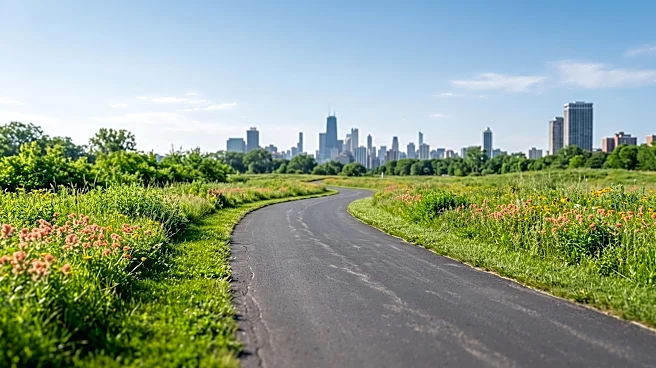
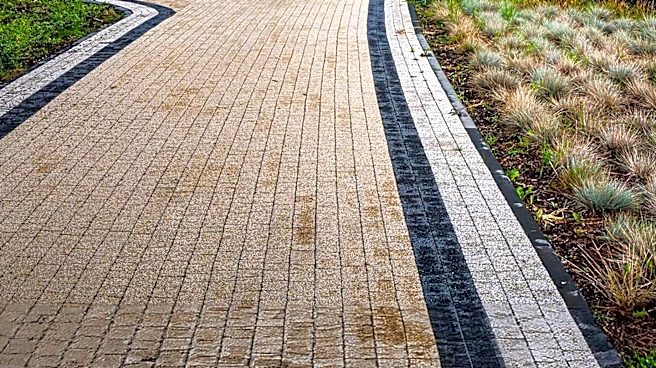
Paepark, a 22-hectare park in Tallinn, Estonia, developed around a former limestone quarry, was landscaped in 2009. The park is situated in the Sikupilli district of Lasnamäe. It features Lake Pae, which is 8 meters deep and has a 1.9-kilometer asphalt
path. The park is divided into three distinct sections: a family area equipped with playgrounds and sports fields, the Nightingale park which offers paths for walking and exercise, and the Hill park that includes a café and an open-air theater. The landscape design incorporates numerous paths, stairs, and viewpoints, and is extensively planted with 150 trees and 300 shrubs, including various species such as willow, aspen, birch, white alder, Prunus subg. Cerasus, Scandinavian rowan, maple, apricot, larch, and mountain pine. The quarry operations ceased in the mid-1960s, leading to the park's development.
Why It's Important?
The development of Paepark highlights urban renewal and the transformation of industrial sites into public green spaces. This initiative provides significant recreational and ecological benefits to the residents of Tallinn, Estonia. The creation of diverse sections within the park, such as the family area, Nightingale park, and Hill park, caters to a wide range of community needs, promoting physical activity, social interaction, and access to nature. The extensive planting of various tree and shrub species contributes to urban biodiversity and improves air quality, demonstrating a commitment to environmental sustainability. Such projects serve as models for other cities looking to repurpose former industrial lands into valuable community assets, enhancing the quality of life for urban populations and fostering a connection with nature.
What's Next?
While the source does not explicitly detail future plans for Paepark, the ongoing maintenance and potential future enhancements of such a significant urban green space are implied. Continued efforts would likely focus on preserving the park's ecological diversity, ensuring the upkeep of its facilities, and potentially introducing new programs or features to further engage the community. The success of Paepark could also inspire similar urban development projects in other parts of Tallinn or Estonia, promoting a broader trend of converting disused industrial areas into public parks. Monitoring the park's usage and community feedback would be crucial for informing any future developments, ensuring it continues to meet the evolving needs of its visitors.
Beyond the Headlines
The transformation of a former limestone quarry into Paepark represents a broader global trend of reclaiming and revitalizing post-industrial landscapes for public benefit. This project not only addresses environmental concerns by greening a previously disturbed site but also fosters community well-being by providing accessible recreational and cultural spaces. The inclusion of a 'Nightingale park' section, specifically designed for walking and exercise, subtly emphasizes the importance of nature in promoting mental and physical health. Such initiatives contribute to a city's resilience and livability, demonstrating how thoughtful urban planning can turn environmental liabilities into valuable assets, enhancing both ecological health and social cohesion. It underscores a shift towards sustainable urban development that prioritizes green infrastructure and public access to nature.