





What's Happening?
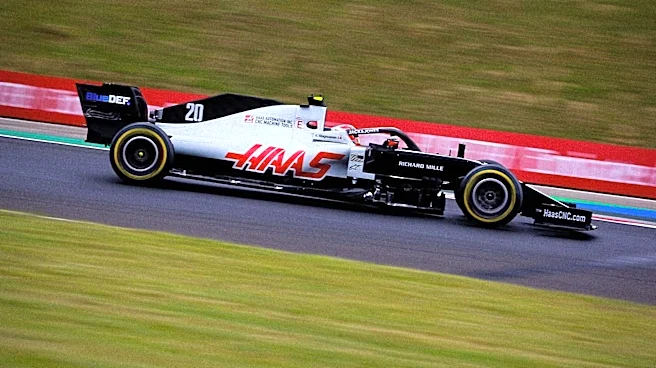
Haas F1 Team is actively seeking a Junior Aerodynamicist to join its Aerodynamics team in Maranello, Italy. This role is pivotal in supporting the aerodynamic development of the Formula 1 car from initial concept through wind tunnel testing. The Junior Aerodynamicist will
be responsible for analyzing experimental and numerical results, developing aerodynamic concepts, preparing test plans and technical reports, and creating documentation for wind tunnel parts. The position also involves designing model components, supporting surface definition, and coordinating testing activities. Candidates are expected to have a strong technical understanding of racing car engineering principles, proven experience with CFD software and 3D CAD software, and knowledge of aerodynamics, fluid analysis, and thermodynamics. Flexibility to support wind tunnel testing during weekends and night shifts is also a requirement. Haas F1 Team, an American-licensed Formula One racing team, debuted in 2016 and operates across the US, UK, and Italy.
Why It's Important?
The recruitment of a Junior Aerodynamicist underscores Haas F1 Team's continuous effort to enhance its competitive edge in Formula 1, where aerodynamic efficiency is a critical determinant of performance. Aerodynamics directly influences a car's speed, downforce, and stability, making this role essential for developing a faster and more competitive vehicle. For the U.S. presence in Formula 1, investing in specialized engineering talent like aerodynamicists is crucial for closing the performance gap with more established teams and showcasing American engineering capabilities on a global stage. This focus on advanced aerodynamic development can also contribute to broader innovations in automotive design and efficiency, potentially influencing future road car technologies. The role offers an early-career engineer a significant opportunity to contribute directly to the performance of a Formula 1 car, fostering the next generation of motorsport engineering talent.
What's Next?
The selection process for the Junior Aerodynamicist will involve evaluating candidates based on their technical understanding of racing car engineering, proficiency in CFD and 3D CAD software, and knowledge of aerodynamics. Once hired, the new aerodynamicist will immediately begin contributing to the design, analysis, and testing of aerodynamic concepts for upcoming Formula 1 seasons. This will involve close collaboration with the Aerodynamics Team Leader and the wider aerodynamics group. The team will continue to conduct extensive wind tunnel testing and numerical simulations to refine aerodynamic designs, aiming for performance gains on the track. The ongoing development cycle will see these aerodynamic improvements integrated into future car specifications, with their effectiveness ultimately measured by on-track performance in races.
Beyond the Headlines
The specialized field of Formula 1 aerodynamics represents the cutting edge of fluid dynamics and engineering. The constant pursuit of aerodynamic efficiency in motorsport drives innovation in computational fluid dynamics (CFD) and wind tunnel technology, which have applications far beyond racing, including aerospace, architecture, and energy efficiency. The demand for highly skilled aerodynamicists highlights the intense intellectual competition within Formula 1, where teams invest heavily in human capital and advanced tools to gain even marginal advantages. For aspiring engineers, a role like this offers unparalleled exposure to advanced engineering challenges and technologies, serving as a significant career launchpad. The global nature of Formula 1 also means that these engineering advancements are shared and debated internationally, contributing to a worldwide pool of knowledge in high-performance engineering.