







What's Happening?
The article provides a retrospective on Jackie Chan's career, focusing on his efforts to break into the U.S. market and his eventual return to Hong Kong filmmaking. It highlights his 1996 film 'Police Story 4: First Strike' (also known as 'Jackie Chan's First Strike in the U.S.')
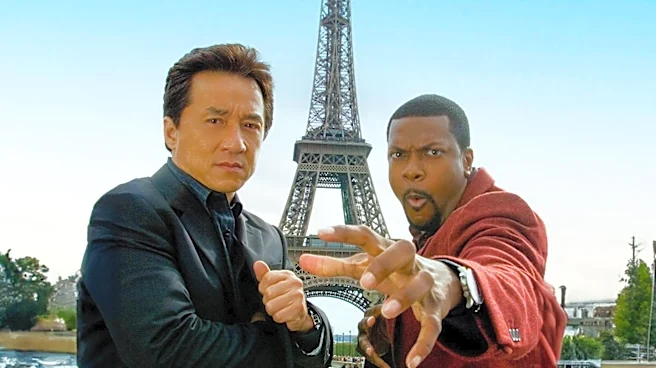
and 1998's 'Who Am I?', analyzing their impact on his global stardom. 'Police Story 4' is described as a commercial peak for Chan during that period, despite its flaws, while 'Who Am I?' is lauded for its impressive stunts, cartoonish comedy, and a standout final fight. The piece notes that while filming 'Who Am I?', Chan was approached for 'Rush Hour,' a buddy cop movie that significantly elevated his status to a household name in the U.S. However, the article also details Chan's eventual disillusionment with Hollywood's rigid filmmaking style and its inability to offer him diverse roles, leading him to return to Hong Kong to focus on more serious or historical films and establish his own production company.
Why It's Important?
This retrospective is important for understanding the dynamics of international film stars navigating the U.S. market. Jackie Chan's experience illustrates the challenges faced by non-Western actors in Hollywood, particularly regarding creative control and role diversity. His initial success with films like 'Rush Hour' demonstrated the potential for crossover appeal, but his subsequent return to Hong Kong highlights a recurring issue where Hollywood's system can stifle the unique artistic contributions of international talent. This narrative sheds light on the cultural and creative compromises often demanded by the U.S. film industry and the impact these demands can have on an artist's career trajectory and creative output. It also underscores the economic and artistic independence that can be found in non-Hollywood film markets, influencing how global talent might approach future collaborations with U.S. studios.
What's Next?
While the article primarily focuses on past events, it implies a continued trend of international stars balancing global appeal with creative autonomy. For actors and filmmakers from diverse backgrounds, Chan's career serves as a case study in navigating the complexities of Hollywood versus their home industries. Future developments might see more international artists following a similar path, leveraging their global fame to gain more creative control in their home markets or seeking hybrid production models that allow for both international distribution and artistic freedom. The ongoing evolution of global film markets, including the rise of streaming platforms and international co-productions, could offer new avenues for artists to avoid the pitfalls Chan experienced, potentially leading to more diverse and creatively fulfilling roles for international talent in the U.S. and beyond.
Beyond the Headlines
Jackie Chan's journey reflects broader themes of cultural exchange and artistic integrity within the global entertainment industry. His initial struggle and eventual breakthrough in the U.S. market, followed by his decision to prioritize creative freedom in Hong Kong, highlight the tension between commercial success and artistic expression. This narrative extends beyond individual careers to touch upon the representation of diverse cultures in mainstream media and the often-ethnocentric nature of Hollywood. It raises questions about how the U.S. film industry can better integrate and respect international talent without imposing restrictive creative frameworks. Furthermore, Chan's influence on a generation of viewers, particularly children through projects like 'Jackie Chan Adventures,' underscores the significant cultural impact of global stars and the potential for entertainment to bridge cultural divides, even as the industry itself grapples with its own biases and limitations.