



What's Happening?
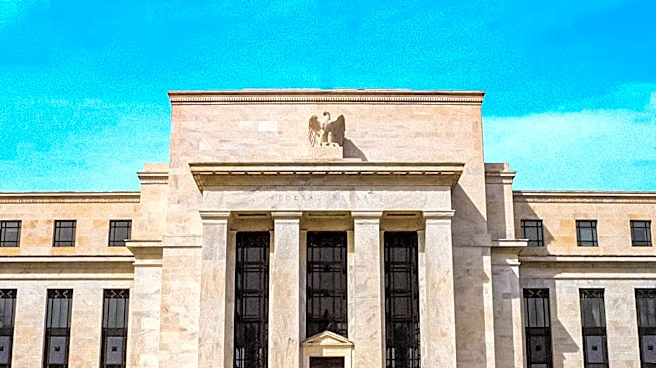
Billionaire investor Bill Ackman has issued a warning that the Federal Reserve's continued pursuit of a 2% inflation target through interest rate hikes could push the U.S. and global economies into a recession. In a recent X post, Ackman, a hedge fund
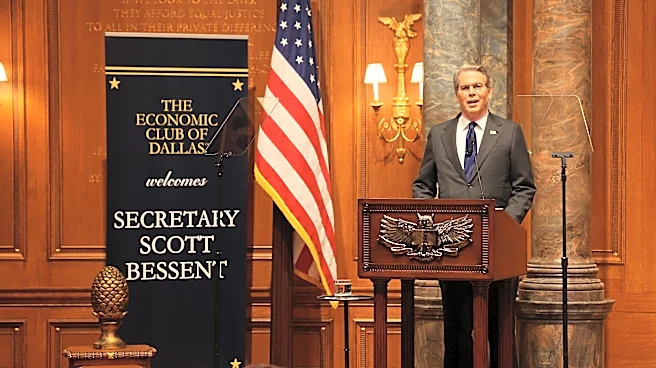
manager, argued that financial conditions have already tightened considerably. He suggested that a 3% inflation target would be more realistic, citing significant global investments in military spending, tariffs, and the expansion of AI infrastructure and energy. Ackman's concerns are echoed by U.S. Treasury Secretary Scott Bessent, who noted that hawkish remarks from Fed officials contributed to a recent stock market sell-off. Bessent indicated that many believe the Fed risks a policy mistake by overtightening. Despite these warnings, the Fed remains divided, with some officials, like Governor Lisa Cook, arguing that financial conditions are still too accommodative to achieve the 2% target and that delaying rate increases could necessitate sharper hikes later.
Why It's Important?
Ackman's warning highlights a critical debate within economic policy circles regarding the appropriate inflation target and the potential consequences of the Federal Reserve's current monetary tightening strategy. If the Fed continues to raise rates in pursuit of a 2% target, it could lead to a significant economic downturn, impacting businesses, employment, and consumer spending across the U.S. and globally. A recession would likely result in job losses, reduced corporate profits, and increased financial instability. Conversely, if the Fed were to adopt a higher inflation target, such as 3% as suggested by Ackman, it could potentially alleviate pressure on the economy, allowing for more growth but also risking a prolonged period of higher prices. The division among Fed officials underscores the complexity of the current economic landscape and the difficult choices facing policymakers, with significant implications for investors, businesses, and everyday citizens.
What's Next?
The Federal Reserve's next decision on interest rates is scheduled for December 9. Market indicators, such as CME FedWatch, suggest a high probability of a quarter-point rate hike, with odds around 91.2%. This upcoming decision will be closely watched for signals on whether the Fed will maintain its aggressive stance on inflation or show any inclination to reconsider its 2% target in light of warnings from figures like Bill Ackman. The ongoing debate among Fed officials, with some advocating for continued tightening and others expressing concerns about overtightening, indicates that future policy decisions will likely remain contentious. The market's reaction to the December decision, particularly in sectors sensitive to interest rates, will provide further insight into the immediate economic outlook. Stakeholders, including investors and businesses, will be monitoring the Fed's communications for any shifts in its long-term strategy regarding inflation and economic growth.
Beyond the Headlines
The debate over the Federal Reserve's inflation target extends beyond immediate economic indicators, touching upon fundamental questions about monetary policy's role in a rapidly evolving global economy. Ackman's argument for a 3% target implicitly acknowledges structural shifts, such as increased global military spending, trade tariffs, and massive investments in AI and energy infrastructure, which could inherently lead to higher baseline inflation. This suggests a potential long-term shift in economic paradigms where the traditional 2% target might no longer be optimal or even achievable without severe economic contraction. The discussion also raises ethical considerations about the trade-off between price stability and economic growth, and who bears the brunt of policies aimed at achieving either. A prolonged period of higher interest rates could disproportionately affect sectors reliant on borrowing, such as housing and technology, and could also exacerbate wealth inequality. The outcome of this policy debate could redefine the Fed's mandate and its approach to managing economic cycles for decades to come.